
The energy sector has moved decisively beyond the pilot stage. Following DistribuTECH 2026 in San Diego, the message to utility and infrastructure leaders was clear: the industry has entered a new phase of full-scale AI deployment.
As thousands of professionals gathered to examine the future of resilient cities and modernized grids, one point stood out above the rest. Even the most advanced grid modernization software delivers value only when supported by the right hardware in the field.
From managing expanding EV charging infrastructure to coordinating mission-critical emergency restoration, the grid edge is where real-time decisions shape operational outcomes. That reality demands a new standard for mobile edge computing, one built for reliability, performance, and uncompromising field readiness.
The Evolution of Proactive Intelligence in the Field
Modern infrastructure management is rapidly pivoting away from reactive “fix-it-when-it-breaks” maintenance. Today’s utilities and city planners aren’t just asking what failed; they are using real-time data to predict exactly what is about to fail.
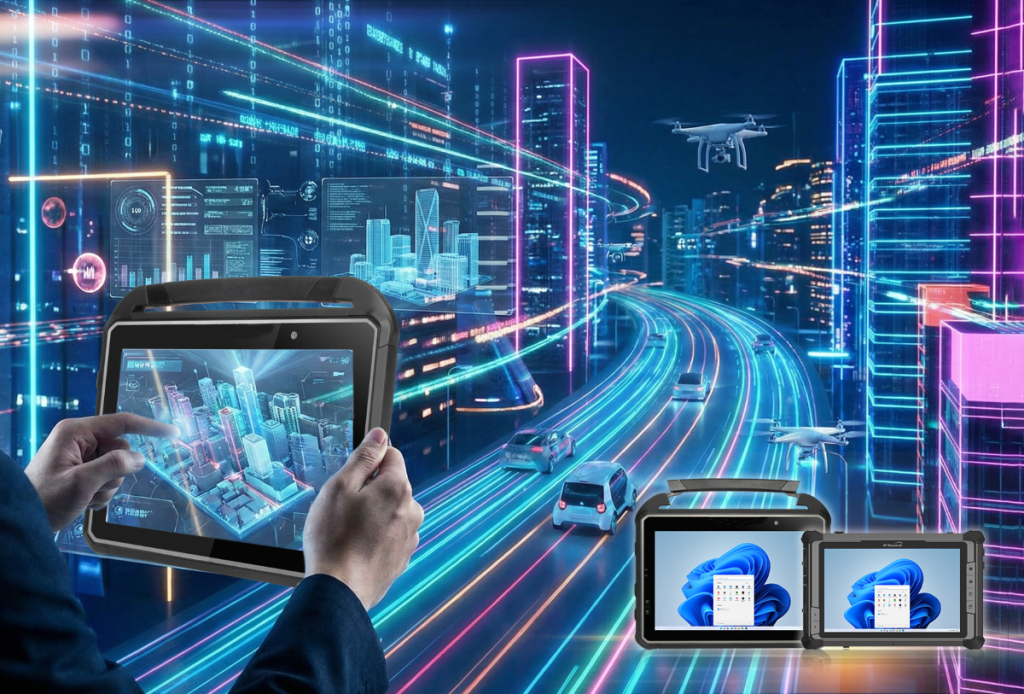
This move requires field technicians to carry more than just a digital clipboard. They need devices capable of local Edge AI processing, high-resolution data visualization, and live digital twin modeling.
By shifting intelligence directly to the edge, organizations achieve two critical goals:
- Predictive Grid Management: Using Edge AI to anticipate load surges before they strain local transformers or substations.
- Risk-Based Asset Oversight: Replacing outdated calendar-based inspections with dynamic models that identify infrastructure fatigue before a service interruption ever occurs.
Smart Cities: Why Interoperability is the True Backbone
While “Smart City” discussions often focus on sensors and 5G, the actual operational challenge is interoperability. Urban planning and construction teams are now integrating complex Distributed Energy Resources (DERs) like municipal solar arrays and microgrids into established city footprints.
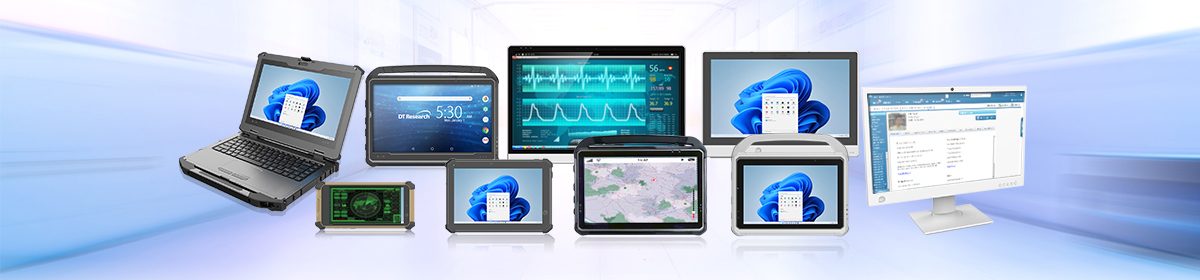
For the mobile workforce, rugged tablets and laptops act as universal communication hubs. These rugged computing solutions must bridge the gap between IT office data and OT (Operational Technology) field data. Whether you’re at a coastal construction site or deep within a high-voltage substation, having a unified data view prevents the silos that have historically led to project delays and budget overruns.
Engineering for Mission-Critical Environments
In high-stakes utility and construction environments, the hardware must perform where failure isn’t just an inconvenience; it’s a safety risk. As we begin integrating “Agentic AI” tools that suggest specific tactical actions to workers in real time, the rugged tablet’s physical reliability becomes a primary safety factor.
Field hardware must be precision-engineered to withstand the stresses of the job site:
- Sunlight-Readable Displays: Outdoor site planning requires high-nit displays that remain clear under direct, high-glare exposure.
- Industrial-Grade Durability: From the constant vibration of heavy machinery to the fine dust of an excavation site, equipment needs to maintain 100% uptime regardless of the environment.
- Hot-Swappable Power: During emergency restoration, a device’s battery life cannot be the reason a crew loses access to their maps or data. Hot-swappable technology ensures crews stay connected until the grid is back online.
The DT Research Advantage: Beyond the Spec Sheet
DistribuTECH 2026 proved that the “Grid of the Future” is already here. However, the software-defined utility requires a hardware-defined foundation. DT Research continues to lead this space by listening to the staff in the field. We don’t just build tablets; we build mission-critical tools that empower the people keeping our cities powered and our water flowing.
As we look toward the rest of 2026, the question for utility leaders isn’t just, “What AI will we use?” but “Is our rugged hardware powerful enough to actually run it?”