
In today’s healthcare environments, technology must move with the pace of care. Clinicians, nurses, specialists, and administrative teams need access to patient information, imaging, reports, and applications wherever decisions are being made. That may be at the front desk, at the patient bedside, inside a crowded operating room, or on a mobile medical cart traveling between departments.
This is where medical-grade All-in-One computers are becoming a practical part of the care workflow.
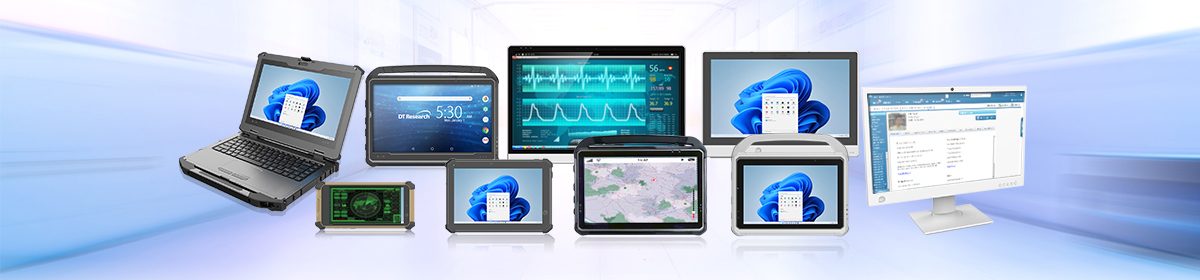
Unlike traditional desktop workstations that stay locked to one location, 15-inch and 17-inch support a more flexible model of healthcare computing. They provide the screen size needed for patient engagement and clinical review, while maintaining a lightweight, compact footprint that makes them easier to mount, move, and deploy throughout space-constrained medical environments.
For hospitals, clinics, labs, and specialty care settings, that flexibility matters.
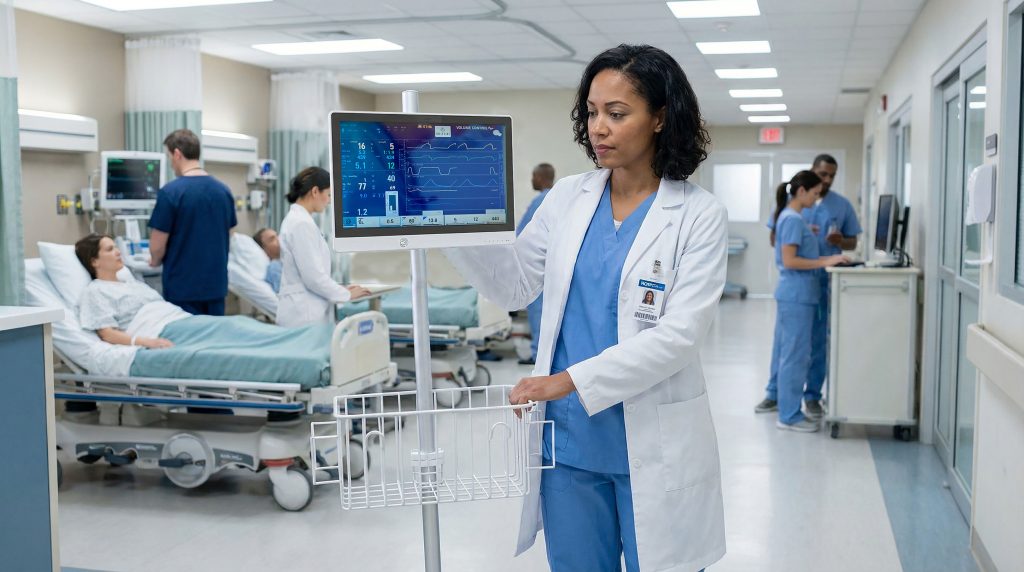
A cart-mounted medical All-in-One can support clinicians during rounds, allowing patient records, test results, images, and treatment plans to move directly to the bedside. Instead of discussing results from memory or returning to a fixed workstation, care teams can review information with the patient in real time. This creates a more connected experience, helping patients better understand their care while giving clinicians immediate access to the data they need.
In reception and intake areas, the same class of system can be mounted on a counter or configured as a kiosk for patient self check-in. This helps streamline administrative workflows, reduce bottlenecks, and support a smoother front-end experience. When space is limited, a compact medical All-in-One design can deliver the functionality of a workstation without requiring a bulky separate computer, consumer-grade monitor, and additional cables.
Inside operating rooms and procedure areas, footprint size becomes even more critical. These environments are often crowded with people, equipment, carts, monitors, and specialized systems. Yet another computing station may still be needed to access patient data, imaging, documentation, or application workflows. A lightweight medical All-in-One with VESA mounting compatibility gives healthcare teams more installation flexibility, whether the system is placed on a cart, arm, wall, or counter.
Power continuity is another major advantage. Hot-swappable battery options allow medical teams to keep systems running as they move between care areas, reducing dependence on wall outlets and helping avoid workflow disruption during active use. In healthcare, where interruptions can create delays and frustration, battery-supported mobility is not just convenient. It helps preserve the rhythm of care.
Medical environments also require systems designed with cleanliness and reliability in mind. Fanless, space-saving designs with antimicrobial enclosures help support clean-sensitive settings where traditional commercial computing systems may not be ideal. Sealed front bezels and durable medical-grade construction further help these systems serve real-world healthcare demands, from daily wipe-downs to constant movement across departments.
For IT and operations leaders, the value comes from versatility. One medical All-in-One platform can support multiple roles: mobile cart workstation, bedside review station, patient intake kiosk, lab computer, or OR support display. That gives healthcare organizations more ways to standardize technology while still adapting to the specific needs of each department.
As healthcare continues moving toward more connected, patient-centered, and space-conscious environments, computing systems must be designed for more than performance alone. They must be easy to place, easy to move, easy to clean, and ready to support care wherever the moment calls.
Medical-grade 15-inch and 17-inch All-in-One computers bring that balance into focus, combining mobility, compact design, hot-swappable power, and point-of-care functionality into systems built for the way healthcare teams actually work.