
Modernizing the Department of the Air Force technology is not simply a matter of moving aging applications into the cloud.
Legacy infrastructure, hybrid environments, cloud-native workloads, distributed users, and connected devices increasingly need to operate as part of one interconnected digital ecosystem. The challenge is modernizing these environments without losing visibility, increasing technical debt, or creating technology dependencies that limit future flexibility.
That makes one principle increasingly important: the infrastructure may change, but visibility cannot.
Modernization Without Losing Operational Visibility
DAFITC 2026 identifies legacy-system modernization, reducing technical debt, and transitioning appropriate workloads toward cloud-native environments as major priorities. For Department of the Air Force organizations, however, modernization rarely happens all at once.
Older systems may continue operating alongside new applications. Some workloads may remain on-premises while others move into public, private, or hybrid cloud environments. Meanwhile, personnel still need reliable access to applications and operational data across bases, facilities, vehicles, logistics operations, and distributed locations.
Maintaining visibility across those environments helps security, network, and operations teams understand what is connected, how systems are performing, and where potential issues are emerging.
Extending the Digital Enterprise to the Edge
The modern digital edge is no longer one physical destination. DAFITC describes it as a continuous digital thread extending from enterprise networks to distributed forces and orbital assets. That changing architecture places greater importance on the endpoint devices personnel use to interact with enterprise systems.
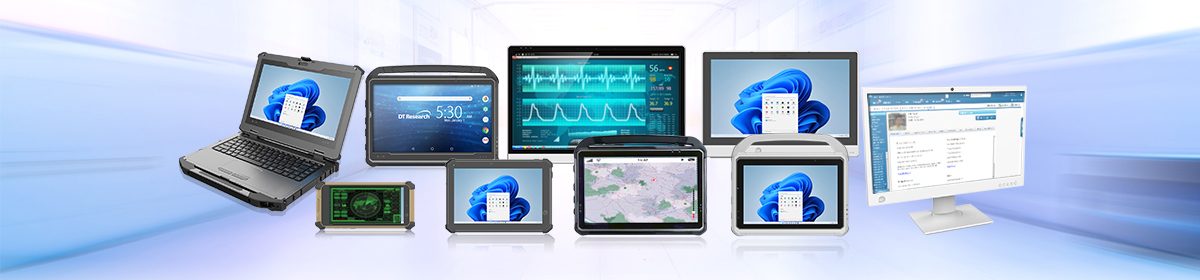
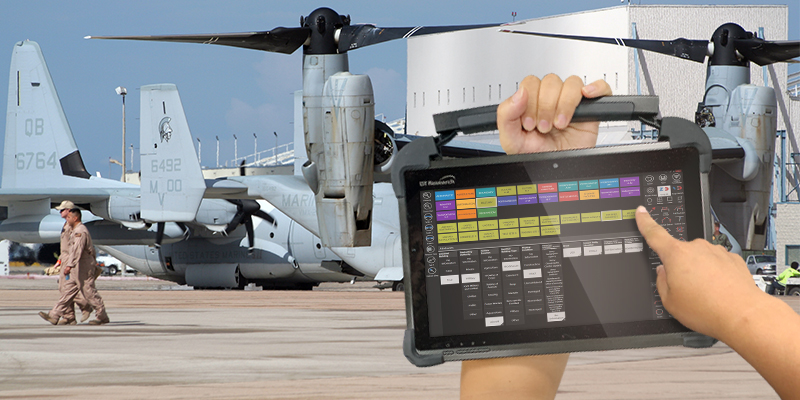
Purpose-engineered rugged tablets can extend access to digital resources beyond traditional office environments while supporting the demanding physical conditions found across defense operations. DT Research rugged tablets offer configurable connectivity and data-capture capabilities alongside options including CAC/smart-card readers and NIST-compliant BIOS. Models are available with IP65 ratings and MIL-STD-810H certification, with select devices also supporting MIL-STD-461G electromagnetic compatibility requirements. This combination provides defense organizations with mobile computing platforms capable of participating in modern digital workflows while operating in demanding environments.
Supporting Zero Trust Through Better Device Context
As defense organizations strengthen Zero Trust and Comply to Connect strategies, knowing what is attempting to connect to a network becomes increasingly important. Security teams need visibility into users, devices, applications, workloads, and network activity so policy can be applied based on identity and context rather than simply assuming that anything inside a network boundary can be trusted.
Secure endpoint hardware forms one piece of that larger architecture. CAC authentication capabilities, controlled hardware configurations, NIST-compliant BIOS options, and enterprise-managed Windows environments can help organizations build rugged mobile systems into broader identity, security, and device-management policies.
The goal is not security for its own sake. It is creating an environment where personnel can securely access the information they need while administrators maintain greater control and visibility across connected assets.
Building an Architecture That Can Continue to Evolve
Modernization also requires flexibility; cloud platforms will change. Network requirements will expand. Applications that are considered modern today will eventually become legacy systems themselves. Defense organizations therefore need architectures that allow individual technologies to evolve without disrupting the entire operational environment.
The same principle applies to endpoint computing. Rather than deploying rigid hardware around one narrowly defined application, configurable rugged tablets can support multiple workflows, peripherals, data-capture technologies, mounting options, and connectivity requirements throughout the device lifecycle.
This aligns with the broader movement toward more agile acquisition and iterative capability delivery. DAFITC’s 2026 program identifies Middle Tier of Acquisition approaches and rapid capability delivery as part of building a faster, more adaptable digital enterprise.
For DT Research, the opportunity is clear. Precision-engineered rugged computing can provide the physical connection between personnel and a modern digital infrastructure, helping organizations modernize existing operations while remaining flexible enough for whatever comes next.