
The operating environment at sea is becoming more complex and dynamic. Large, centralized fleet structures are transitioning toward a more adaptive and networked model called Distributed Maritime Operations (DMO).
At its core, operational advantage in modern defense environments is driven by information clarity and spectrum awareness. True effectiveness comes from having a deeper, real-time understanding of the operating environment across every domain.
As platforms, autonomous systems, and personnel operate across thousands of miles, the challenge shifts from concentration to coordination. How do you maintain seamless alignment when assets are widely distributed? The answer lies in resilient connectivity, shared data visibility, and rugged edge technology that keeps every node synchronized.
What Does Information Superiority Mean in Distributed Maritime Operations?
Information superiority is not about volume. It is about precision. The right data, processed at the operational edge, securely shared in real time across distributed platforms.
In a Distributed Maritime Operations environment, success depends on three core principles:
- Decentralized Decision-Making
Equipping individual units with the intelligence and tools required to operate independently when connectivity is limited or disrupted.
- Integrated C4ISR Frameworks
Bringing together Command, Control, Communications, Computers, Intelligence, Surveillance, and Reconnaissance into a unified, real-time operational picture.
- Spectrum Awareness and Resilience
Maintaining full situational visibility across friendly systems while protecting communications and sensing capabilities in complex electromagnetic environments.
Turning this strategic vision into reality requires more than software alone. The hardware operating at the edge must be resilient, secure, and purpose-built for demanding maritime conditions. This is where rugged, precision-engineered tablets play a critical role.
The Role of Rugged Computing at the Tactical Edge
Standard office laptops would last about five minutes in a high-end maritime operation. Between the salt fog, the constant vibration of the hull, and the potential for high-impact shocks during mission-critical operations, the environment is brutal.
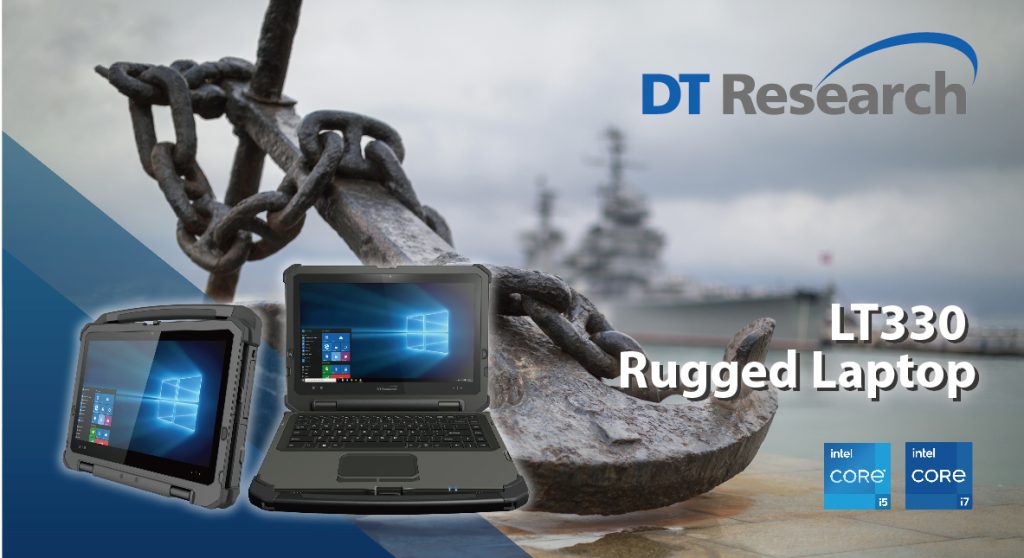
Precision-engineered rugged tablets and laptops are designed to be the “brains” of this distributed force.
Here’s how they support information dominance:
1. Resilient Connectivity for a Netted Force
In Distributed Maritime Operations, a laptop isn’t just a computer; it’s a communication hub. Rugged tablets and laptop computers feature integrated Wi-Fi, long-range BT wireless connectivity , and 4G/5G LTE, alongside specialized ports for satellite links. This ensures that even in remote “dead zones,” a small boat team or an expeditionary unit stays connected.
2. Real-Time Processing (Edge Computing)
Information dominance requires speed. You can’t always wait for a remote server to process sensor data. Rugged tablets with high-performance Intel® Core™ processors allow for edge computing, analyzing sonar or drone feeds right on the spot. This turns raw data into actionable intelligence in seconds, not minutes.
3. Survivability in the Harsh Blue Water
A device that fails due to a splash of saltwater or a drop on a steel deck is a liability. Rugged systems are built to meet MIL-STD-810H standards and IP65 ratings. They are:
- Water Resistant: Preventing water damage that destroys standard electronics.
- Shock and vibration-proofed: Capable of withstanding the vibration of an engine room or the “thump” of a flight deck.
- Sunlight Readable: Featuring high-brightness (1000-nit) screens so sailors can actually see their charts in high glare.
Security: The Foundation of Operational Integrity
Information superiority begins with secure infrastructure. If a network is compromised, visibility and coordination break down. Maritime environments demand resilient cybersecurity, especially across distributed systems operating in dynamic conditions.
Today’s rugged platforms integrate hardware-level protections such as CAC readers, physical security locks, and BIOS-level safeguards that protect sensitive data at the device level. Even in the event of device loss, encrypted systems are designed to preserve data integrity and prevent unauthorized access.
Empowering the Modern Maritime Workforce
Rugged technologies bridge the gap between distributed and connected operations. Whether a technician in the engine room is running diagnostics on a rugged laptop or a crew member aboard a small vessel is coordinating unmanned systems through a secure tablet, access to reliable edge computing keeps teams aligned in real time.
Distributed Maritime Operations represents a forward-looking shift in how maritime systems operate. By placing secure, high-performance, rugged computing into the hands of every operator, organizations ensure that even when assets are widely dispersed, connectivity, clarity, and coordination remain intact.