
Manufacturing has always been about precision. Precision in timing. Precision in materials. Precision in execution. But today, precision depends just as much on data flow as it does on production flow.
Manufacturing has evolved beyond machines and manpower. Today, performance depends on how fast information moves across the floor. Production lines operate in real-time. Supply chains adjust by the minute. Quality control cannot wait for end-of-shift reports. Yet in many facilities, data still lags behind operations. That gap is where inefficiency hides.
Rugged tablets are closing that gap. Not as convenient devices. Not as IT upgrades. As operational infrastructure.
Data at the Point of Action
The true power of rugged tablets lies in proximity. When operators and supervisors can access systems directly on the production floor, information becomes immediate. Work orders update in real time. Inventory adjustments are logged instantly. Maintenance tickets are created the moment an issue is identified.
There is no return trip to a shared terminal. No handwritten notes waiting to be entered later. No lag between activity and reporting. That shift changes everything. Real-time visibility allows leadership to see production as it unfolds. It allows teams to correct issues before they escalate. It reduces duplicate data entry and the human error that follows. Manufacturing becomes proactive instead of reactive.
What PalletOne Teaches About Modern Manufacturing Mobility: The Real Bottleneck Wasn’t Labor. It Was Information.
Before adopting rugged tablets, PalletOne faced a familiar challenge across distributed production environments. Information moved slower than operations. Paper-based tracking, manual entries, and shared workstations created friction between what was happening on the floor and what leadership could actually see.
The result was not a catastrophic failure. It was something more subtle and more dangerous:
- Delayed data entry
- Limited real-time visibility
- Increased risk of human error
- Reduced accountability across shifts
In high-output facilities, even minor inefficiencies compound quickly. When production lines move fast but reporting lags behind, decision-makers are always reacting instead of leading.
Mobility as a Strategic Layer
By deploying rugged tablets from DT Research, PalletOne transformed mobility into a core operational layer.
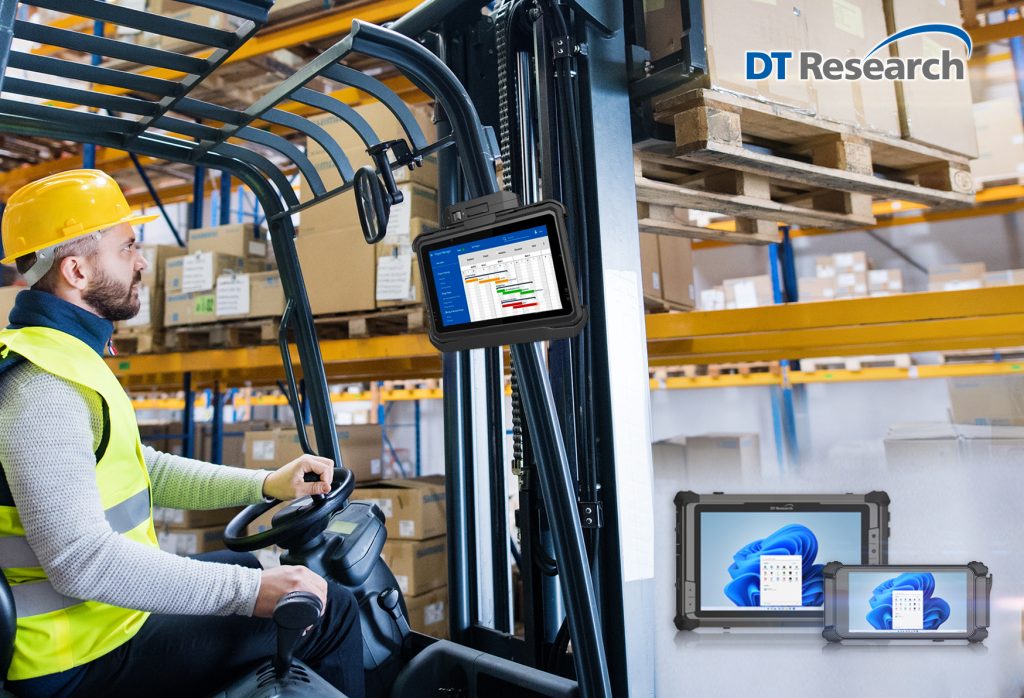
These were not consumer tablets placed in protective cases. They were precision-engineered tablets for manufacturing environments. With industrial-grade durability, long battery life, and reliable connectivity, the tablets were designed to survive drops, vibration, dust, and constant movement.
More importantly, they enabled workers to capture data at the point of activity.
Instead of walking back to a fixed terminal, supervisors and operators could:
- Access production metrics in real time
- Update job status immediately
- Track materials and output without delay
- Improve shift-to-shift communication
The technology did not add complexity. It removed friction.
Visibility Creates Accountability
One of the most overlooked advantages of rugged mobility is cultural impact. When data becomes immediate, transparency increases. When transparency increases, ownership follows.
With real-time access to operational systems, PalletOne strengthened internal alignment. Production teams gained clearer insight into performance metrics. Managers gained better oversight without micromanagement. Reporting became consistent across facilities.
The rugged tablet became more than a tool. It became a bridge between execution and strategy.
Durability Is Not Optional in Manufacturing
Manufacturing floors are unforgiving. Devices are dropped. Dust settles into ports. Vibrations test internal components. Consumer-grade hardware fails under that pressure.
DT Research rugged tablets are built to industrial standards such as IP-rated ingress protection and MIL-STD durability testing. That resilience ensures systems remain operational throughout full shifts and across varied production environments.
For manufacturers, device failure is not just inconvenient. It interrupts workflow and erodes trust in digital systems. Reliability protects both productivity and adoption.
A Shift from Reactive to Proactive
The deeper lesson from PalletOne is not about tablets. It is about timing.
When information flows instantly, decisions improve. When decisions improve, downtime decreases. When downtime decreases, margins strengthen. Manufacturers that embrace rugged mobility are not simply modernizing their hardware. They are restructuring how operational intelligence moves through the organization.
In a competitive market where speed and accuracy define profitability, the factory floor cannot afford blind spots. The future of manufacturing is not just automated. It is connected, visible, and mobile. Rugged tablets are no longer optional accessories; they are operational infrastructure.
And the manufacturers who understand that shift will lead the next decade of production excellence.
The New Standard for Manufacturing Operations
Mobility is no longer an add-on. It is a structural layer within the modern manufacturing strategy. Rugged tablets support barcode scanning, ERP integration, asset tracking, and real-time analytics directly on the shop floor. They bridge the physical and digital worlds without sacrificing durability or reliability.
As production environments become more data-driven, the cost of information delay continues to rise. Manufacturers that invest in rugged mobility are not simply upgrading hardware. They are strengthening the connective tissue of their operations. And in a landscape where margins are tight and expectations are higher than ever, that connectivity makes all the difference.