
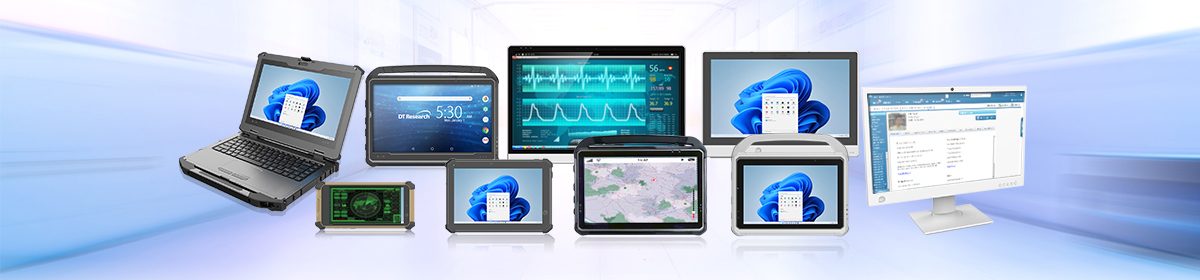
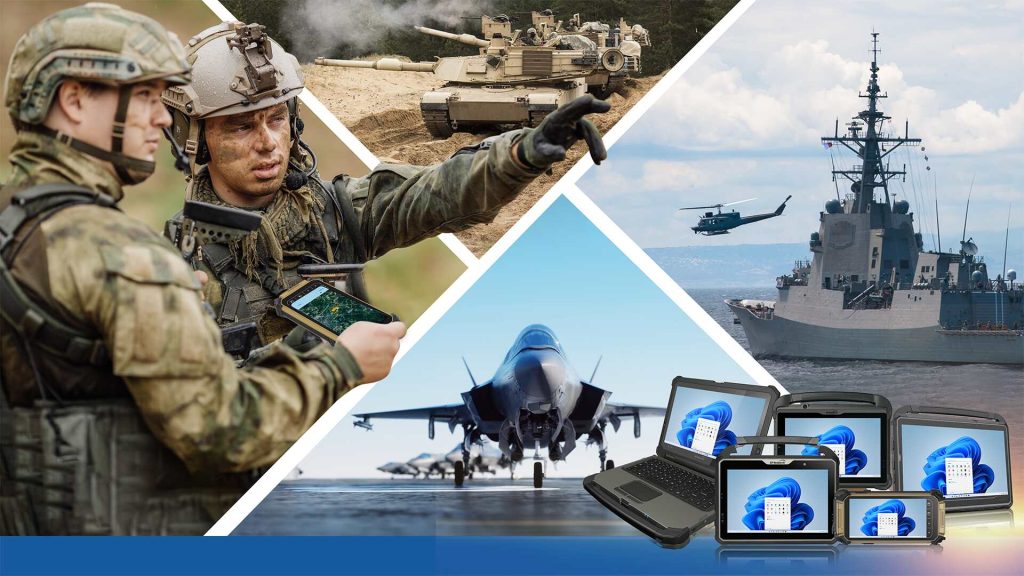
The digital defense environment of 2026 is no longer defined by who has the most hardware but by who can move data securely, quickly, and intelligently when and where it matters most. The recently concluded Sea-Air-Space 2026 exposition presented that the shift toward Joint All-Domain Command and Control (JADC2) has moved from a conceptual framework to a physical reality. At the core of this evolution is the latest generation of rugged tablets and laptops.
Real-time collaboration is not just a “feature” but mission-critical in high-stakes defense operations. Whether it is a medic in a field hospital or a commander in a mobile command unit, the ability to share low-latency, secure data determines the success of the operation and the safety of the personnel.
The Mission Requirement: Real-Time Collaboration
Modern military operations require a shared operating picture that allows for co-invention and rapid adaptation. This has resulted in the creation of hardware that enables “ChatOps,” or real-time messaging integrated with operational systems, for rapid decision-making from raw data.
To achieve these objectives, rugged tablets and laptops must meet these requirements:
- Speed and Low Latency: In areas like defense zones or open water maneuvers, delayed messaging can pose a threat to national security.
- Secure Information Exchange: Systems must allow for safe collaboration across different security domains, often in air-gapped environments.
- Reliability: Platforms must be “always on,” able to handle high-volume data streams without thermal throttling or hardware failure.
Deployment Across the Modern Military Landscape
Rugged tablets and laptops are built to excel in mission-critical environments, breaking down silos between agencies to create a unified team.
1. In the Command and Control (C2) Center
The hub of any operation requires seamless interoperability. Military-grade tablets and laptops are precision-engineered for Joint All-Domain Command and Control (JADC2), allowing coordinated action across air, land, sea, cyber, and space.
- The Feature: Cross-Domain Security. Rugged tablets and laptops allow operators to access multiple levels of classified data on a single, secure platform, reducing the need for multiple bulky workstations and allowing for a more agile command structure.
2. In the Warehouse and Logistics Yard
Logistics is the heartbeat of readiness. In the warehouse or the vehicle fleet yard, military-grade tablets must act as data entry points that feed directly into the strategic planning loop.
- The Feature: Integrated RFID and Long-Range Scanners. By integrating these data-capture tools directly into the rugged mobile systems, logistics officers can conduct incident responses and inventory audits in real-time, streamlining the supply chain for critical infrastructure.
3. At the Training and Simulation Center
Effective training requires a single, virtual workspace where teams scattered across different locations can work instantly.
- The Feature: High-Resolution Cameras and Hot-Swappable Batteries. Instructors use built-in cameras to capture real-time performance data, while hot-swappable batteries ensure that the system never powers down even during an 8-hour field exercise. The “always-on” capability is essential for maintaining the high-volume data streams required for modern telemetry.
4. In the Medical Center and Field Hospitals
Military medical environments are unique. They require rugged durability for demanding field conditions while maintaining the cleanliness, precision, and infection-control standards of a clinical setting.
- The Feature: Fanless Operation. A fanless design is critical for reducing the spread of airborne particles and pathogens. This makes the rugged tablets ideal for field hospitals where keeping a sterile environment is just as crucial as accessing secure patient records via the cloud.
Why DT Research Leads the Way
The line of rugged tablets and laptops offered aren’t just durable; they are precision-engineered for the specific rigors of federal operations.
- High-Brightness Screens: With displays reaching 1000 nits or more, rugged tablets and laptops remain readable in the harsh glare of a flight deck or a desert motor pool, ensuring no delay in information sharing due to environmental factors.
- Ruggedized Chassis: Built for MIL-STD-810H standards, these rugged computing systems can withstand drops, vibration, and extreme temperatures, environmental stressors that would instantly neutralize consumer-grade electronics.
- Security First: With TAA compliance and hardware-level encryption, these rugged mobile computers meet the stringent requirements for secure information exchange in air-gapped environments.
Bridging the Gap Between Detection and Response
The definitive goal of real-time collaboration is to reduce the gap between detecting a threat and responding to it. As the military shifts toward a more distributed, data-centric model, the hardware used at the “edge” must be as capable as the servers in the Pentagon.
The rugged tablets and laptops designed and manufactured by DT Research represent a new standard in military computing. By combining mobility with high-speed processing and cross-domain security, they provide the shared operating picture necessary for success in 2026 and beyond. Whether for strategic planning, incident response, or remote operations, these devices are the essential tools for a unified, cohesive defense force.