
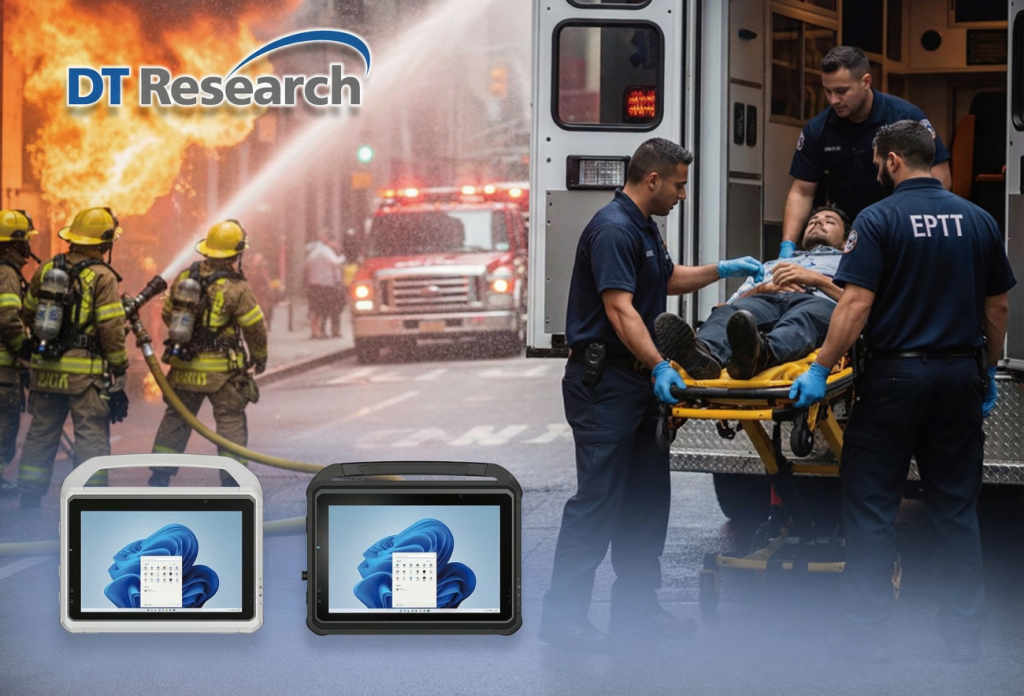
When the alarm sounds at the station, every single second counts. Whether responding to a multi-vehicle collision on a rain-slicked highway or entering a smoke-filled residential fire, first responders don’t have the luxury of time, ideal weather conditions, or second chances. In those high-stress moments, the last thing EMS crews and firefighters need to worry about is whether their technology will hold.
Today’s emergency teams require purpose-built, rugged medical tablets engineered specifically for the rough realities of field response.
Beyond “Rugged”: What First Responders Actually Need
It’s easy to drop a consumer tablet into a thick plastic casing and call it field-ready. But any paramedic or firefighter who has tried taking patient notes in pouring rain, direct sunlight, or with heavy gloves knows that off-the-shelf tablets frequently fail when relied upon.
That is why purpose-built medical tablets are designed from the inside out to handle unpredictable emergency environments:
- Readability & Touch Control: High-bright screens ensure critical electronic Patient Care Reports (ePCR) remain crisp and readable under intense afternoon glare. Capacitive touchscreens respond flawlessly even when operated with gloved hands or when rainwater streams across the display.
- Hot-Swappable Battery: Offsite emergency calls can span hours. Purpose-built tablets feature hot-swappable batteries, allowing responders to swap in fresh batteries without shutting down.
- Disinfection & Infection Control: Emergency vehicles move from one patient encounter to the next. Medical-grade antimicrobial enclosures enable swift, aggressive wipe-downs using medical disinfectants between calls without degrading the hardware.
Connecting the Chain of Survival from the Scene to ER
First response care is fundamentally about continuity of care. The data recorded inside the ambulance directly shapes the treatment decisions made in the emergency department moments later.
Using integrated RFID readers, barcode scanners, and high-speed cellular networks, emergency responders can scan patient IDs, record vital statistics, track administered medications, and securely transfer complete electronic health records to the destination hospital before the vehicle even leaves the curb.
When emergency rooms receive real-time updates while units are en route, trauma teams can prepare operating rooms, line up blood transfusions, and clear specialized bays well ahead of arrival, which dramatically reduces critical door-to-treatment times.
Built for the Rigors of Fire & Rescue Operations
Inside an emergency response vehicle, tech equipment faces severe vibration, accidental drops, dust, and dramatic temperature swings. Precision-engineered medical tablets undergo rigorous MIL-STD-810H and IP65 testing to ensure resistance to water, shock, and dust penetration. Mounted securely inside the cab or carried directly into a structural incident, they deliver consistent performance anywhere duty calls.
At DT Research, we believe technology should empower first responders, not slow them down. We design mobile computing solutions tailored to the real-world demands of fire departments, rescue squads, and EMS professionals nationwide.