
Road construction sites are fast-paced, constantly evolving environments that require careful coordination, reliable communication, and a strong focus on safety. From major highway expansions to local resurfacing projects, construction crews must navigate active traffic, heavy equipment, changing terrain, and confined work areas while maintaining efficiency, precision, and productivity throughout each phase of the project.
For road crews, heavy equipment operators, and civil engineers, maintaining situational awareness is essential to ensuring jobsite safety, improving operational efficiency, and keeping projects on schedule.
While traditional safety protocols like high-visibility gear, traffic cones, and flaggers remain essential, modern roadwork demands a digital line of defense. High-performance rugged tablets bridge the gap between field crews and real-time spatial data, delivering pinpoint location intelligence that helps prevent work zone collisions, improve roadway design, and lay the foundation for safer transportation networks.
1. Protecting Active Work Zones: Digital “Avoidance Zones” in Action
Road construction environments are constantly evolving, requiring crews to remain aware of changing site conditions to maintain safety and efficiency. Heavy equipment such as excavators, asphalt pavers, and compactors often have significant blind spots, while motorists travel in close proximity to active work zones, separated by temporary barriers and traffic cones. These conditions highlight the importance of clear communication, real-time visibility, and coordinated operations to support a safer, more productive jobsite.
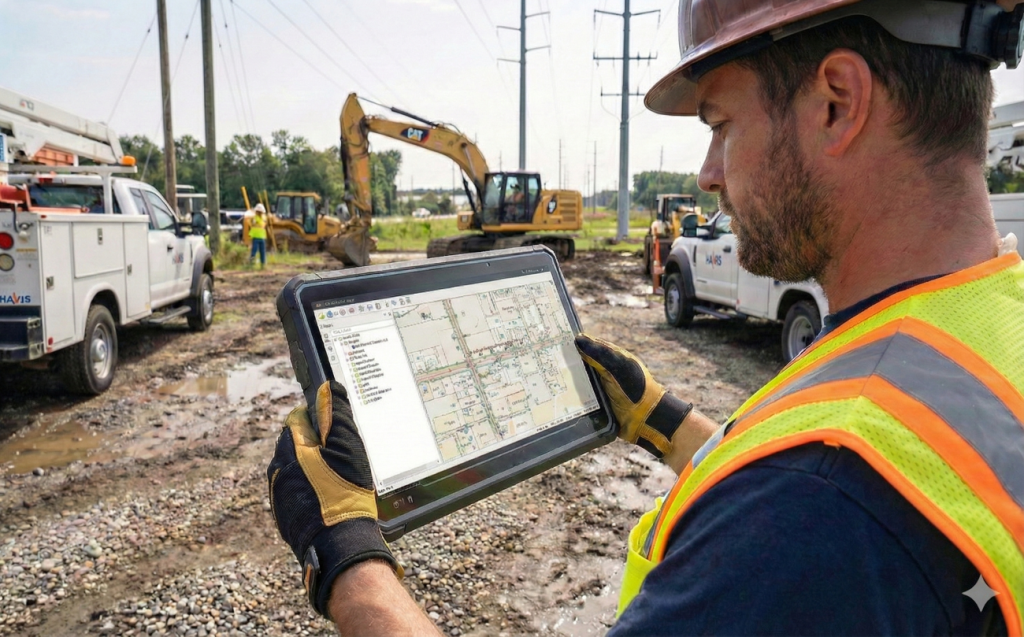
Mounting rugged tablets into field vehicles or handing them to field surveyors can create digital ‘no-go zones’.
- Real-Time Proximity Alerts: By using GNSS positioning and accurate mapping software, operators can see where heavy vehicles are in real-time. This will show operators where the vehicle is compared to live traffic, power lines, and underground infrastructure.
- Operator Awareness: If a heavy vehicle’s boom or bucket gets too close to live traffic or underground gas lines, the rugged tablet will give visual and audio alerts to the operator within the cab.
- All-Weather, High-Visibility Hardware: Standard consumer tablets won’t work well in bright sunlight, extreme temperatures, high vibration, or rain. Precision-engineered rugged tablets have high-brightness screens for outdoor visibility, which means alerts can be seen clearly, and an IP rating for water spray protection
These real-time perimeter warnings give heavy equipment operators immediate feedback, stopping dangerous movements before a minor lapse in visual sightlines turns into a catastrophic collision.
2. Engineering Smarter, Safer Roadways: From Crash Reconstruction to Prevention
To avoid future road accidents, it’s important to know why current accidents happen. If there has been a collision in or near a road construction zone, it is important to get the scene cleared as soon as possible. However, safety engineers will need to gather accurate data from the scene.
Civil engineers and forensic teams use rugged tablets with 3D laser-scanning and mapping software to create digital reconstructions.
- Accurate cause identification: Rather than relying on simple photographic evidence or manual measuring tapes, high-accuracy spatial scanning reveals critical engineering factors such as obstructed sightlines, inadequate lane taper lengths, or improper curve grading that contribute to vehicle hydroplaning.
- Data-Driven Infrastructure Redesign: Engineers aggregate this precision data to identify recurring hazardous stretches along municipal corridors and state highways.
- Seamless Field-to-Office Sync: Rugged tablets have built-in WiFi and 4G/5G to allow field engineers to take, calculate, and upload heavy data points into a central GIS database without leaving the project site.
By analyzing exact physical metrics rather than estimates, civil engineering teams can redesign dangerous intersections, improve bank angles on curves, and optimize construction zone layouts to eliminate hazard vectors before crews break ground.
3. Increasing Vehicle Safety with High-Accuracy Mapping
As vehicle safety technology evolves, features like Automatic Emergency Braking (AEB), Dynamic Lane-Keeping Assist, and fully autonomous vehicle systems rely heavily on precise location data and detailed digital maps to navigate safely through complex construction corridors.
Standard GPS positioning, which can drift by several meters, is simply not accurate enough to guide a semi-truck or consumer vehicle safely past a temporary lane shift bounded by concrete barriers.
Rugged tablets equipped with multi-constellation GNSS receivers and Real-Time Kinematic (RTK) positioning supply centimeter-level location accuracy directly to field mapping teams.
- Centimeter-Level Mapping: Field workers can map temporary roadworks, lane changes, and barriers using a rugged tablet.
- Invisible Foundation for Autonomous Safety: By using a high-accuracy mapping system, autonomous vehicles and ADAS can receive accurate real-time spatial updates about active roadwork configurations.
- Reliable edge device: To calculate accurate location data, the tablet needs a powerful processor. Rugged tablets have powerful processors and hot-swappable batteries so they can run continuously throughout long shifts.
By establishing high-precision positioning data right at the pavement level, rugged tablets provide the foundational data network that enables next-generation vehicle safety systems to navigate changing road geometry without human error.
Built for the Job Site: Why Purpose-Engineered Ruggedization Matters
In the demanding environment of road construction, hardware durability directly impacts site safety. A failed screen or lost connection means lost situational awareness.
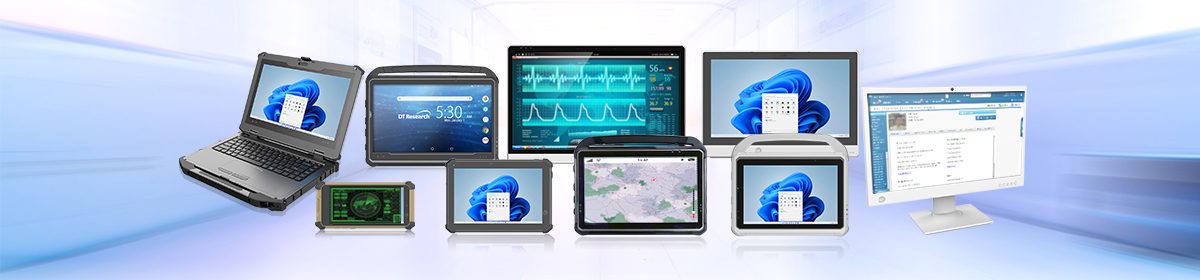
DT Research rugged tablets are engineered specifically for demanding enterprise infrastructure projects:
- MIL-STD-810 Certified: Tested against extreme shock, drop, continuous machinery vibration, and thermal extremes.
- IP-Rated Ingress Protection: Complete protection against dust, fine debris, driving rain, and water jets during site washdowns.
- Continuous Operations: Hot-swappable battery architecture ensures tablets remain powered across multi-shift highway paving operations without downtime.
- Uncompromised Connectivity: Multi-carrier cellular connectivity keeps field teams tied directly to central dispatch, GIS databases, and site management tools in real time.
Safer Work Zones, Better Infrastructure
By using a combination of tools to keep road construction safer, workers can be kept safe. By providing real-time ‘no-go’ alerts, accurate data collection, and high-accuracy location, field workers can work more efficiently, keeping their zones safe and keeping everyone safe on the road.