

The reliability and safety of power distribution networks have never been more critical. Hospitals, transit networks, emergency services, and entire communities can all be affected by a single power outage. In this scenario, powerline utilities are under increasing pressure to update their techniques for managing and monitoring powerlines without sacrificing efficiency, accuracy, or safety. This is true as well when it comes to vegetation management. As climate conditions become more unpredictable, vegetation patterns become more complex.
By incorporating cutting-edge technologies like 3D sensors, satellite images, and drone technology, traditional distribution line inspection and asset management techniques have undergone significant evolution. In addition, improvements in deep learning (DL) and machine learning (ML) have made it easier to analyze inspection data more thoroughly.
However, existing methods frequently fail to sufficiently assess and reduce multi-factor hazards, including vegetation encroachment, snow and ice loading, and wind-borne debris, which continue to result in power outages, particularly in inclement weather, highlighting the shortcomings of these traditional approaches.
This is where Digital Twin (DT) technology, paired with precision-engineered rugged tablets, is reshaping the future of powerline and vegetation management.
Digital Twin: A Transformative Platform for Utilities and Vegetation Management
A Digital Twin is a dynamic, virtual representation of a physical asset that continuously integrates real-time data, simulations, and predictive analytics. Utilities are able to transition from snapshot inspections to continuous, predictive risk management in the context of distribution powerlines because of the Digital Twin technology.
For vegetation management, Digital Twin moves beyond snapshot inspections toward continuous, predictive risk management. By combining data from UAV footage, LiDAR point clouds, satellite data, and ground-based sensors, a Digital Twin can:
- Simulate vegetation growth and encroachment scenarios
- Forecast outage risks under adverse weather conditions
- Analyze powerline sag, clearance distances, and structural stress
- Encourage proactive maintenance planning rather than reactive response
This approach improves power system safety while strengthening long-term infrastructure resilience, laying the groundwork for a more sustainable energy future.
Where Rugged Tablets Power Digital Twin in the Field
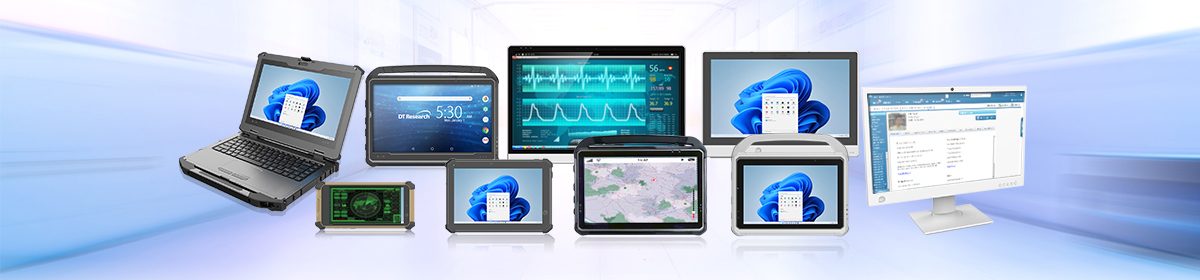
Digital Twin technology is only as effective as the data feeding it and that data often starts in the field. Rugged tablets and rugged laptops play a critical role in bridging physical powerline assets with their digital counterparts.
Rugged computing systems are purpose-built for utility environments, enabling field crews to:
- Collect and validate inspection data in real-time
- View 3D powerline models and vegetation overlays on-site
- Access DT simulations, risk maps, and maintenance workflows
- Operate reliably in rain, snow, extreme heat, and high-vibration conditions
Unlike consumer devices, rugged tablets and laptops are designed for continuous outdoor use, glove-touch operation, long battery life, and seamless integration with GIS, LiDAR, UAV, and asset management platforms.
From Reactive to Predictive Vegetation Management
One of the biggest causes of power outages is still vegetation encroachment. Although vegetation identification and categorization have been enhanced by machine learning (ML) and deep learning (DL) models, their full potential is only achieved when integrated into a unified Digital Twin framework.
With Digital Twin-enabled vegetation management, utilities can:
- Forecast vegetation growth patterns near distribution lines
- Prioritize trimming based on predicted risk, not just proximity
- Model how wind, ice, or storms could drive vegetation into powerlines
- Reduce wildfire risk, short circuits
This shift from reactive maintenance to predictive analytics allows utilities to allocate resources more efficiently while improving public safety.
A Smarter Path to Grid Resilience
The adoption of Digital Twin doesn’t require an overnight transformation. Many utilities begin with semi-automated workflows combining UAV inspections with manual analysis before progressing toward fully digital, AI-driven monitoring. Rugged computing systems support this evolution, providing a reliable platform as utilities modernize their asset management strategies. Together with Digital Twin technology, they deliver the real-time insight, mobility, and durability needed for power line and vegetation management.
DT Research supports utilities at every step of this journey, delivering rugged computing solutions that empower safer inspections, smarter vegetation management, and a more resilient power grid for the future.