
Healthcare systems worldwide are facing mounting backlogs, particularly in specialist clinics. Referral volumes continue to rise, waitlists are under pressure, and clinicians are stretched across increasingly complex patient needs.
Modern primary care cannot operate in isolation. It must be connected, collaborative, and designed around patient access. This is where digitally enabled shared care models are transforming delivery, and where medical tablets and All-in-One (AIO) clinical workstations play a critical role.
Connecting General Practitioners and Specialists in Real Time
In a shared care model, general practitioners connect directly with specialists through secure messaging and structured digital consultation platforms. Rather than sending every complex case into the referral pipeline, GPs can obtain specialist clinical advice quickly while maintaining the trusted patient relationship.
Digitally delivered advice is treated as formal specialist input, overseen by credentialed clinical staff. This ensures quality, accountability, and consistency across the care continuum.
Medical-grade tablets and AIOs provide the secure, reliable interface that makes this model scalable. Precision-engineered for clinical environments, these flexible computing systems support encrypted communications, secure authentication, and seamless integration with EMR systems. Clinicians are not forced to rely on fragmented third-party tools or informal messaging platforms. Communication remains centralized, secure, and compliant.
Reducing Referral Volumes and Waitlist Pressure
When GPs have fast access to specialist advice, unnecessary referrals decrease. Patients who can be managed in primary care remain there. Those who truly require specialist intervention are prioritized appropriately.
This has a measurable impact:
- Reduced referral volumes
- Lower waitlist pressure
- Faster triage and decision-making
- Improved patient access to timely care
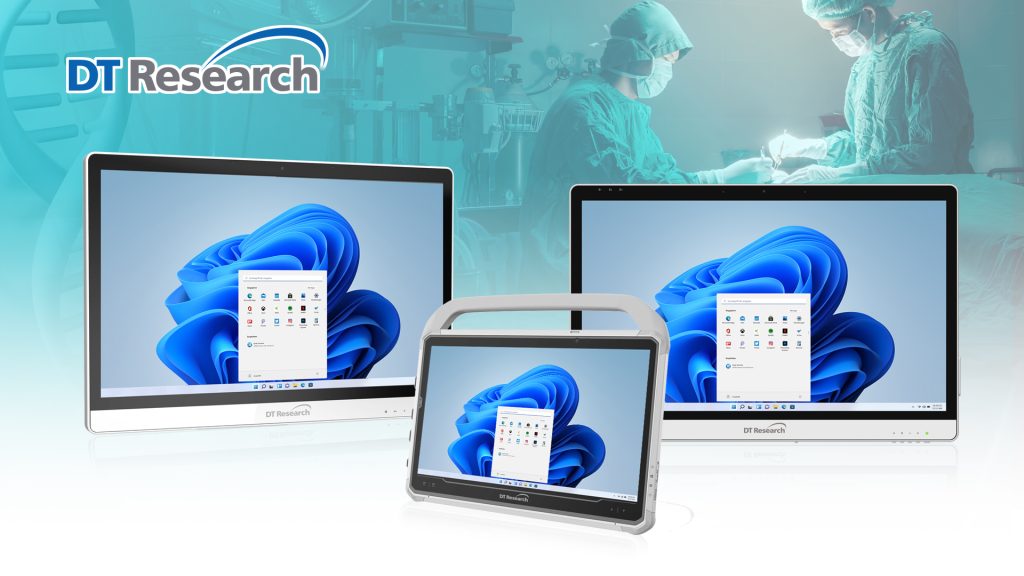
Medical All in One’s deployed in specialist clinics further streamline intake and review processes. With high-performance computing, integrated cameras, and touch interfaces designed for clinical workflows, specialists can assess referrals, review imaging, and respond to consultation requests efficiently.
The result is a coordinated system rather than a bottlenecked pipeline.
Automating Workflows to Free Up Clinical Time
Shared care is not only about communication. It is also about operational efficiency.
Medical tablets and AIOs support automation of critical workflows, including:
- Uploading consultation documents directly into the EMR
- Notifying patient admissions
- Managing digital advice records
- Standardizing documentation across providers
By reducing manual administrative steps, clinicians reclaim time for patient care. Automation reduces duplication, minimizes documentation errors, and supports consistency across care teams.
Designed for Modern, Collaborative Primary Care
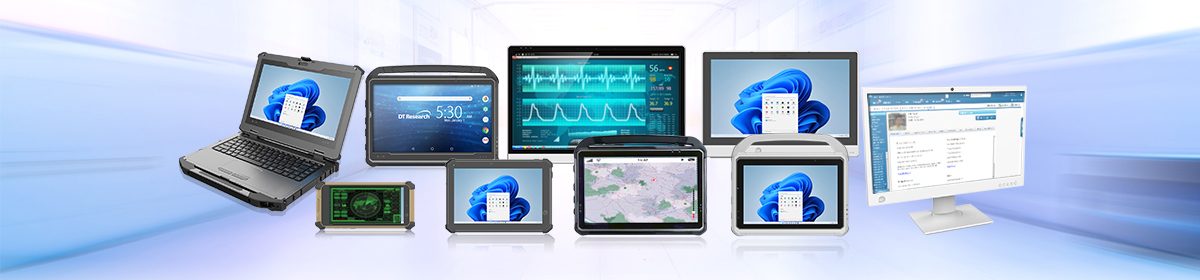
For shared care models to succeed, technology must be dependable in high-demand environments. Medical tablets and AIOs are precision engineered specifically for healthcare settings, with antimicrobial enclosures, hot-swappable batteries for continuous operation, and secure authentication features such as Smart Card or CAC readers.
These are not consumer devices adapted for clinics. They are precision-built clinical tools that enable secure communication, optimized workflows, and coordinated care delivery.
Key Features:
- Antimicrobial Enclosures and Fanless Operations: In chronic care settings where patients may be immunocompromised, infection control is paramount. Medical tablets and AIOs feature antimicrobial enclosures that inhibit the growth of microorganisms, ensuring the device itself does not become a vector for cross-contamination. Fanless operations means a reduction in airborne contaminants to further prevent bacteria ciculation.
- High-Resolution Capacitive Touchscreens: Whether viewing detailed radiological images or navigating complex EMR interfaces, clinicians require clarity and a device that is responsive even when used with surgical gloves.
- Hot-Swappable Batteries: Chronic care doesn’t stop for a charging cycle. Medical tablets and AIOs have a hot-swappable battery design, allowing for 24/7 operation without losing data or shutting down applications.
- Integrated Data Capture: Beyond BT wireless connectivity, medical tablets house built-in barcode scanners, RFID/NFC readers, and Smart Card/CAC readers for secure authentication and patient verification.
- Rugged Reliability: Rated with IP65 and MIL-STD-810H standards, rugged medical tablets withstand the drops, spills, and heavy-duty disinfectants common in busy clinics and hospitals.
Healthcare is moving toward a more integrated model where primary and specialist providers operate as a connected network. By equipping clinicians with precision-engineered medical tablets and AIOs, healthcare organizations can improve access, reduce backlogs, and support a digitally enabled shared care system designed around patients.
Backlogs are a systems problem. Shared care, supported by secure clinical technology, is part of the solution.