Healthcare organizations have spent years digitizing patient information, connecting electronic medical records, and expanding access to clinical data. The next step in digital transformation is ensuring that data is not only available but also accurate, complete, traceable, and useful when and where clinicians need it.
Healthcare organizations have invested heavily in digital transformation, from electronic medical records and connected medical devices to mobile workstations and hospital-wide information systems. Yet the next phase of clinical mobility is not simply about adding more technology.
It is about making technology work more naturally within the way clinicians deliver care.
Recent research from VDC Strategy highlights a shift in healthcare mobility from basic device deployment toward broader workflow modernization. Healthcare organizations are looking for ways to reduce fragmented processes, improve communication, strengthen care coordination, and give clinical teams greater access to information wherever care is taking place.
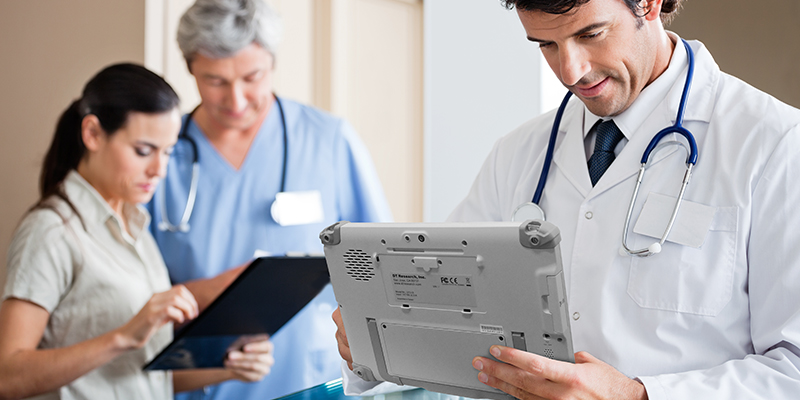
Clinical teams rarely work from one location. Nurses move between patient rooms, nursing stations, medication areas, and diagnostic departments. Physicians may review patient records at the bedside, collaborate with specialists, or move between multiple areas of a hospital during a shift.
Mobile computing allows critical information to move with them.
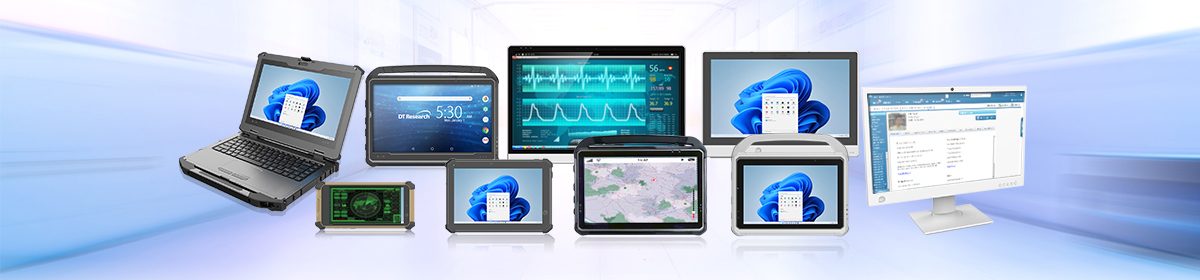
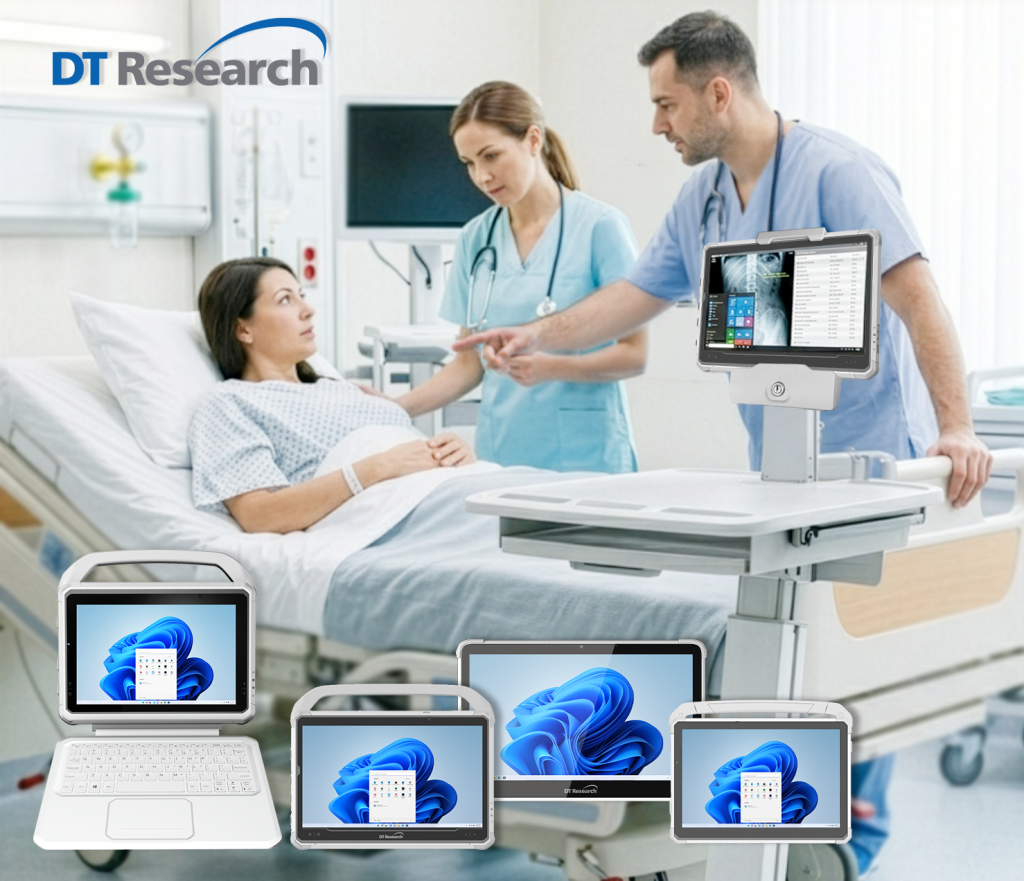
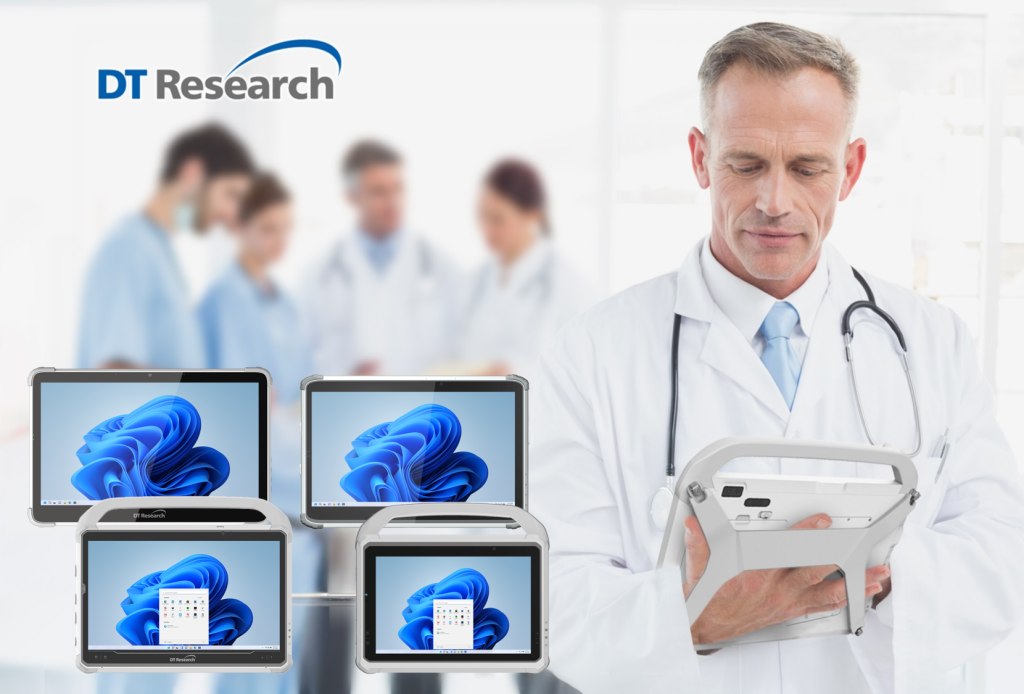
DT Research Medical Tablets are designed specifically for healthcare environments, providing clinicians with portable access to patient information, clinical applications, and data capture capabilities at the point of care. Available models include options such as
integrated barcode scanning
RFID/NFC readers
cameras, smart card readers
wireless connectivity
Helping healthcare organizations consolidate multiple workflow requirements into a single mobile platform. Instead of returning to a fixed workstation for every task, clinicians can access and document information closer to the patient.
Designed for the Realities of Healthcare
Consumer mobile devices may offer portability, but clinical environments introduce additional requirements.
DT Research Medical Tablets are available with antimicrobial enclosures and models certified to ANSI/AAMI ES60601-1 medical electrical equipment standards. Select medical tablets also feature IP65-rated protection and MIL-STD-810H certification for durability.
These design characteristics support deployment throughout hospitals, clinics, mobile healthcare environments, and other demanding settings where devices may be moved frequently and cleaned repeatedly.
Battery performance is equally important. DT Research models offer 10”, 13”, 16″, and 17” touch displays and incorporate hot-swappable battery designs, allowing batteries to be replaced while maintaining continuous operation. This helps reduce workflow interruptions during extended clinical use.
Supporting More Connected Clinical Operations
The evolution of clinical mobility also extends beyond individual clinicians.
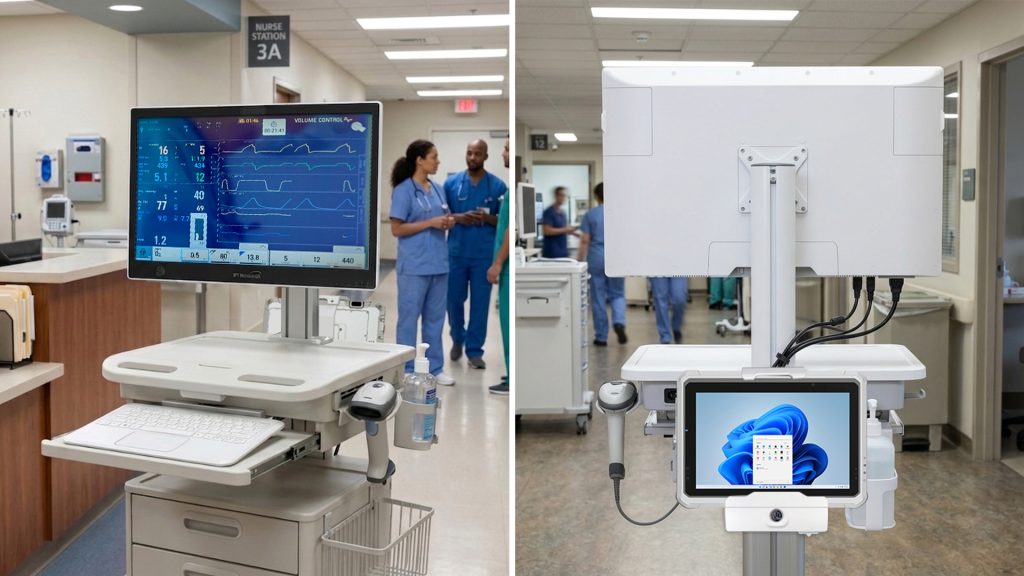
Medical tablets and mobile workstations increasingly serve as connection points between healthcare professionals, electronic medical records, hospital information systems, diagnostic platforms, inventory systems, and other clinical resources.
Integrated barcode and RFID capabilities can support workflows such as patient identification, medication verification, specimen tracking, and medical asset management. Wireless connectivity allows information captured at the point of care to flow back into clinical systems without relying on disconnected paper processes or delayed manual entry.
The result is a more connected clinical environment where information can follow the workflow rather than requiring the workflow to follow the computer.
Moving Clinical Mobility Forward
As healthcare organizations continue modernizing point-of-care operations, mobility strategies will increasingly be measured by how well they support clinicians rather than simply how many devices are deployed.
With medical tablets, medical cart computers, all-in-one systems, and other healthcare computing solutions, DT Research helps healthcare organizations build flexible technology environments designed around mobility, reliability, secure access to information, and continuity of care.
The next phase of clinical mobility is about connecting people, systems, and information wherever care happens. DT Research is building the technology designed to move with it.
Healthcare digital transformation is entering a new phase. Hospitals have spent years digitizing medical records, reducing paper-based processes, streamlining data entry, and implementing electronic workflows. Now, the opportunity is to take the next step by putting that information to work more effectively at the point of care.
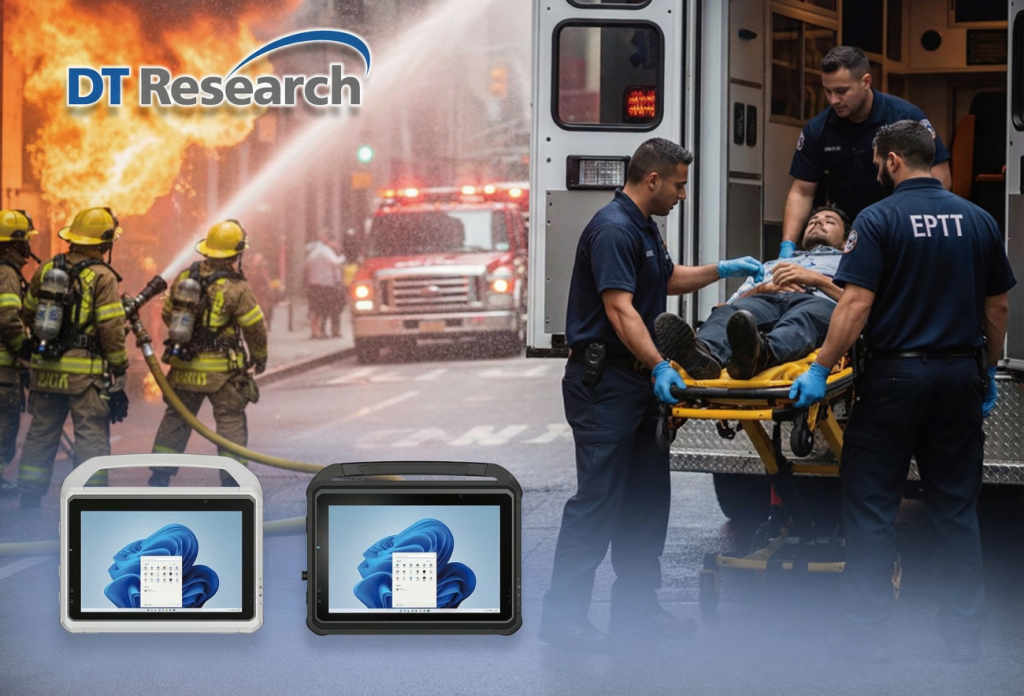
Imagine trying to save a life while fighting against your own equipment. For Emergency Medical Services (EMS) units, first responders, and healthcare frontline workers, that frustration has been a reality for years. They work in environments where things are either bouncing in the back of an ambulance, running through busy emergency departments, or stepping into unpredictable, rain-slicked accident scenes.
Healthcare IT isn’t just about keeping the network! It’s about making sure nurses and doctors aren’t fighting their hardware during a chaotic shift. When it’s time to upgrade clinical devices, the conversation usually splits down the middle: do we invest in large-screen Medical All-in-One (AIO) computers, or do we go all-in on lightweight medical tablets? There isn’t a single right answer here. Instead, it comes down to balancing two major things: portability and versatility.