
Lithium-ion batteries power mobile devices across healthcare, government, logistics, manufacturing, and field operations. But unlike the device itself, a battery is a consumable component. Every charge cycle, period of storage, temperature fluctuation, and year of use gradually affects battery health.
Because much of this degradation happens internally, an unhealthy battery may not immediately appear damaged. Recognizing the warning signs early and establishing proper battery inspection and replacement procedures can help organizations protect employees, equipment, and operational uptime.
What Causes Lithium-Ion Battery Damage?
Battery degradation is a normal part of the battery lifecycle, but several factors can accelerate the process:
- Normal aging and charge cycles: Every lithium-ion battery has a finite useful lifecycle.
- Physical damage: Drops, impacts, or damage to the casing can compromise internal components.
- Temperature extremes: Prolonged exposure to excessive heat or cold can affect battery health and performance.
- Improper storage: Batteries stored for extended periods under unfavorable environmental or charge conditions may degrade faster.
- Charging practices: Keeping batteries fully charged for extended periods, allowing them to remain deeply discharged, or using incompatible charging equipment can create additional stress.
- Manufacturing defects: Internal defects can occasionally result in premature battery failure.
For organizations managing fleets of rugged tablets and medical all-in-one computers, battery maintenance should be treated as part of overall device lifecycle management.
How to Identify a Damaged Battery
A battery showing physical abnormalities or unusual operating behavior should never be ignored.
Common warning signs include:
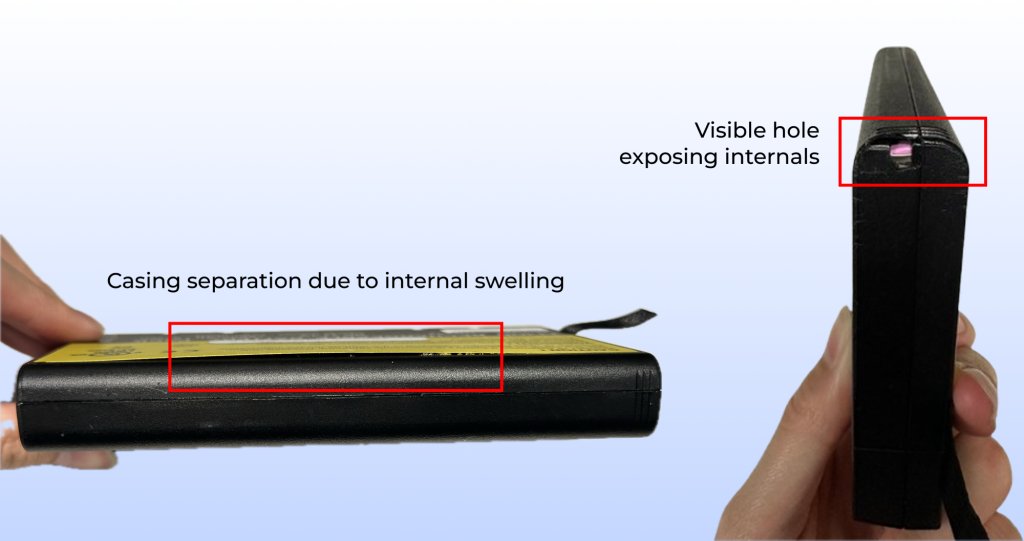
- Swelling or bulging
- Cracked or separated casing
- Discoloration or corrosion
- Leaking fluid
- Unusual heat
- Rapid battery drain
- Unexpected device shutdowns
- Erratic or unsuccessful charging
- Unusual chemical or burning odors
- Hissing or popping sounds
A swollen battery may push against the device enclosure or prevent the battery from sitting properly within its compartment. If any of these conditions occur, discontinue use and charging immediately.
How to Safely Handle a Damaged Battery
A battery that is swollen, leaking, overheating, cracked, or otherwise damaged should not be returned to normal operation.
When it is safe to do so:
- Stop charging or using the battery immediately.
- Disconnect the device from external power.
- Keep the battery away from combustible materials, other batteries, metal objects, and direct sunlight.
- Move people away if the battery is overheating, smoking, venting, or making unusual sounds.
- Follow the device manufacturer’s battery handling and safety instructions.
Never puncture, crush, bend, open, or attempt to repair a swollen or damaged lithium-ion battery.
Proper Battery Disposal
Lithium-ion batteries should never be placed in regular trash or standard recycling containers. Damaged batteries can create a fire hazard during collection, transportation, and processing.
Instead, organizations should follow manufacturer guidance and use an appropriate battery recycling, hazardous waste, or certified e-waste facility. Businesses managing large device fleets should also establish a documented process for identifying, isolating, tracking, and disposing of damaged batteries.
What Should You Do if a Battery Begins Smoking or Catches Fire?
An overheating lithium-ion battery can enter a condition known as thermal runaway, which can result in venting, fire, or additional battery cells becoming involved.
If a battery begins smoking, venting, or burning:
- Alert others in the area.
- Evacuate to a safe location.
- Contact emergency services.
- Avoid breathing fumes or gases.
- Do not attempt to pick up or move an actively burning battery.
- Follow established facility emergency procedures.
Battery fires can reignite even after the visible fire appears controlled, so emergency response should be left to trained personnel.
Prevention Starts With Battery Fleet Management
Organizations deploying rugged tablets and medical all-in-one computers across demanding environments should incorporate battery health into routine fleet maintenance. Preventative measures can include:
- Using manufacturer-approved charging equipment
- Following recommended charging and storage practices
- Avoiding prolonged exposure to extreme temperatures
- Inspecting batteries periodically
- Tracking battery age and usage
- Removing questionable batteries from circulation
- Establishing planned replacement schedules
- Using battery monitoring and fleet management tools when available
For operations where device uptime is critical, hot-swappable battery designs can provide an additional advantage by allowing batteries to be replaced while helping maintain continuous device operation.
Battery Health Is Part of Device Reliability
Rugged tablets and medical all-in-one computers may be precision engineered for years of use, but their batteries operate on a different lifecycle. Treating batteries as consumable components helps organizations recognize developing problems, plan replacements, and maintain a safer, more dependable mobile technology fleet.
Regular inspection, proper charging and storage practices, responsible recycling, and proactive battery fleet management can help support consistent performance, workforce productivity, and operational readiness.
