
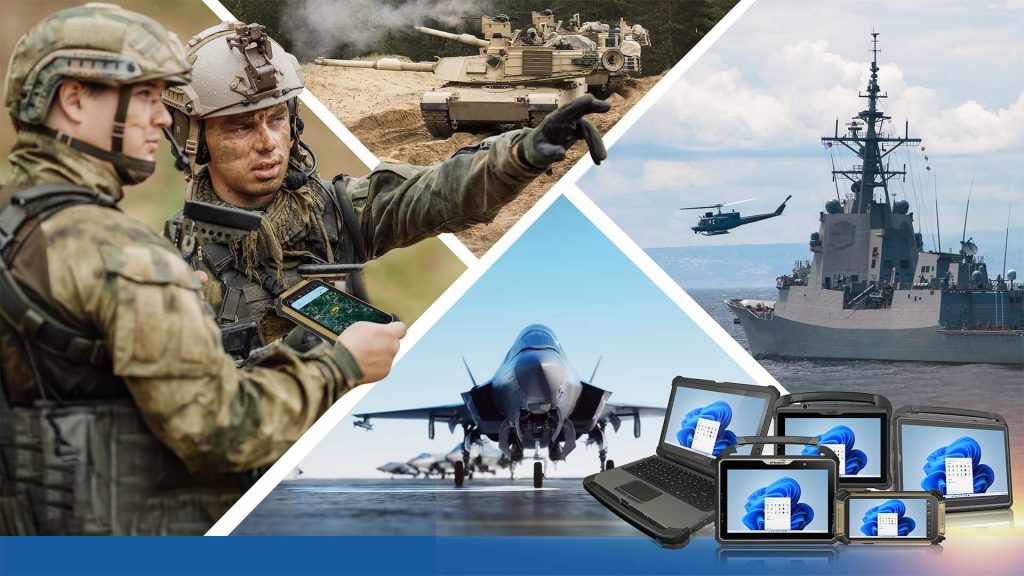
The recent military aviation revolution is demanding faster technology integration, greater cost control, enhanced security, and long-term adaptability. As airframes are pushed to serve for decades, the electronics inside them cannot afford to stay still. Modern mission success depends heavily on split-second data processing at the tactical edge, whether that means running AI-driven autonomy or executing real-time electronic military tactics.
To keep pace, defense programs are shifting away from rigid, proprietary “black boxes” toward a modular open systems approach (MOSA). While open software frameworks like the Future Airborne Capability Environment (FACE) Technical Standard optimize code portability, the military needs hardware that can survive the flight line.
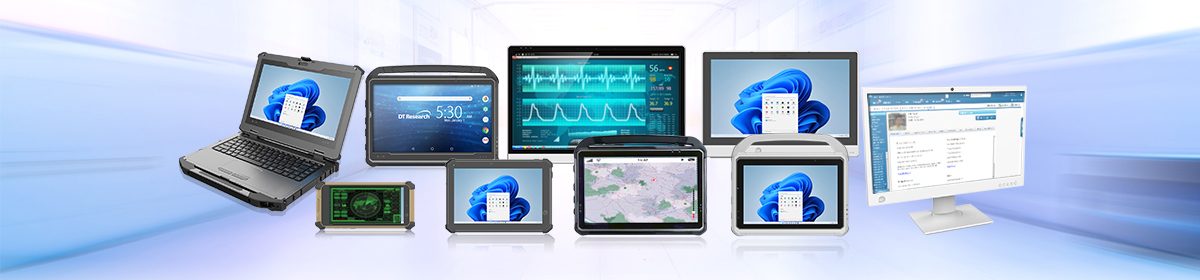
Purpose-built rugged tactical tablets and laptops act as the physical anchor for this modernization strategy, bridging the gap between open-system software architectures and harsh operational environments.
1. Bridging the Compute Gap with Commercial Core Platforms
One of the most difficult problems in aviation modernization is clashing timelines: commercial chipmakers update AI accelerators and GPUs every 12 to 18 months, while strict military qualification and flight-certification cycles can extend to a decade. By the time a standard ruggedized chassis is fielded, the processing power inside is often three generations behind.
DT Research’s military-grade tablets and laptops resolve this lag by integrating high-performance, energy-efficient Intel® Core™ i5/i7 processors directly into highly specialized tactical form factors. Running standard, secure operating systems like Windows 10/11 IoT Enterprise, these flexible computing systems allow program managers to decouple functional software logic from old onboard flight hardware.
Flight crews can run modular tactical planning apps, drone control software, and precision mapping tools on the fly without waiting a decade for an aircraft chassis overhaul.
2. Hardware-Anchored Multilevel Security (MLS)
Modern avionics require a strict approach to data isolation. Systems must support multilevel security, allowing modules with different classification levels, such as open navigation tools and highly classified mission algorithms, to coexist securely on shared hardware.
DT Research’s military-grade rugged tablets and laptops enforce these strict security barriers through hardware-anchored protections:
- Built-in Smart Card/CAC Readers: Provide user authentication and role-based access control right at the point of data entry.
- NIST BIOS Compliance & Root of Trust: Secure the boot architecture, ensuring that core firmware cannot be compromised by malicious code or interception tactics.
- Tactical Application Isolation: High-performance processing baselines enable secure hypervisors, allowing open logistical tracking and encrypted flight line data paths to run on a single piece of hardware without cross-contamination.
3. Optimizing Human-Systems Integration (HSI)
A system is only as agile as the people who operate and maintain it. Human-systems integration spans workload, training burdens, and the logistical realities of updating software on a flight line. Integrating training requirements early into the critical design review process can reduce a technician’s time-to-proficiency by as much as 40%.
DT Research’s rugged computers are designed to simplify training and minimize workload through physical usability optimizations:
- Hot-Swappable Batteries: Users can swap the battery pack without shutting down the computer or losing critical flight updates, keeping the permanent tether to the original equipment manufacturer (OEM) or fixed ground power.
- MIL-STD Night Vision Screen Options: Specialized screens operate under dual brightness profiles. They switch from an ultra-bright, 1000-nit sunlight-readable screen for midday tarmac checkouts to an ultra-dim profile compatible with Night Vision Goggles (NVGs) for covert operations.
- Glove-Friendly Touch and Programmable Buttons: Featuring capacitive touch panels that respond flawlessly through flight gloves or rain, edged by physical programmable buttons for rapid, no-look application switching.
4. Built for Extreme Mil-Spec Flight Line Survival
Software portability matters very little if the physical hardware fails under operational stress. DT Research rugged tablets and laptops are engineered to survive where consumer tech shatters.
- MIL-STD-810H & IP65 Certifications: Fully tested to withstand harsh drops, shock, non-condensing humidity, and intense vibration.
- MIL-STD-461G Electromagnetic Compatibility: Crucial for aviation, this certification ensures that the tablet does not emit electromagnetic interference that could disrupt aircraft navigation or communication arrays, and conversely, protects the device from onboard radar fields.
- HERO (Hazards of Electromagnetic Radiation to Ordnance) Certified: Safely operates around munitions and refueling systems without sparking risk.
Scalable Readiness for the Future Flight Line
Modernizing military aviation is no longer just about building faster airframes; it is about building smarter, more adaptable digital ecosystems inside them. By implementing a strict modular open systems approach and leaning on purpose-built DT Research rugged solutions, defense programs protect their investments, lower life cycle costs, and ensure that operators always fly with the most advanced edge capabilities available.