
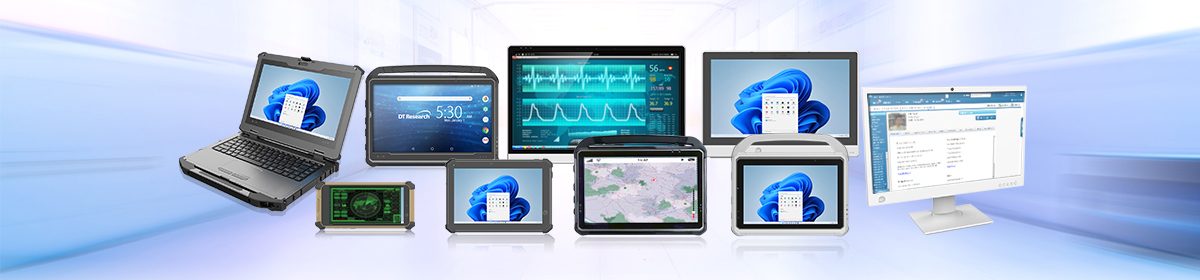
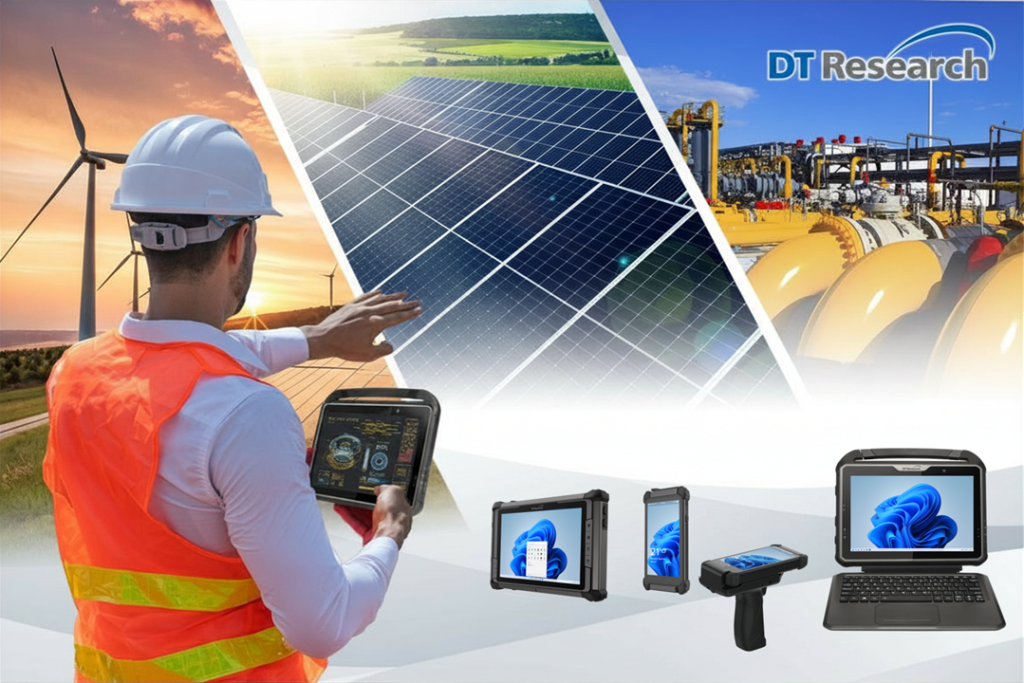
The global energy transition isn’t just an abstract conversation happening in a boardroom. It is actively unfolding in the trenches, up on utility poles, and across sprawling substations. As our power grids evolve to incorporate renewable energy, manage smart meters, and handle unpredictable weather patterns, the infrastructure supporting them has to evolve too.
But grid modernization isn’t just about massive hardware like smart transformers or high-voltage lines. It’s about the tool in the hand of the field technician working in a torrential downpour to restore power to thousands of homes.
Consumer-grade tablets simply can’t survive this line of work. To build a resilient, modern grid, utility teams need specialized, enterprise-grade hardware.
Let’s look at how precision-engineered rugged tablets drive the utility revolution.
The Reality of Grid Modernization in the Field
Field crews operate under brutal conditions. They deal with extreme temperatures, bright sunlight that turns standard screens into mirrors, drops from high buckets, and constant exposure to dust and water.
Furthermore, today’s grid management demands sophisticated data processing right at the edge. Technicians need to run asset management systems, review complex schematics, map GIS coordinates, and use long-range scanners to log components.
Key features of precision-engineered rugged tablets:
- True Durability: Built to IP65 waterproof standards and MIL-STD-810H military certifications for extreme shock, drop, and vibration.
- Continuous Power: Hot-swappable batteries mean the tablet stays alive across shift changes without shutting down software apps.
- Sunlight-Readable Displays: Screens pushing up to 850–1000 nits of high brightness so text remains crisp under direct afternoon sun.
Depending on the specific job card, utility companies are finding that different form factors solve distinct field challenges.
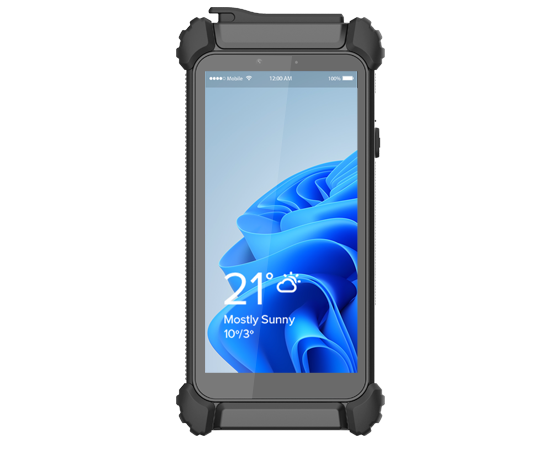
1. Ultra-Mobile 6-Inch Tablets: Replacing the Smartphone
For technicians who need absolute mobility, a traditional tablet is too bulky. This is where 6-inch rugged handhelds step in. They fit right in a pocket or on a tool belt but carry the full processing muscle of a desktop computer.
Rugged tablets such as the DT Research DT362 series are perfect examples of this category.
- The Power of Full Windows: Unlike consumer smartphones that run limited mobile apps, these 6-inch tablets run a full version of Microsoft® Windows® 11 IoT Enterprise. This allows crews to run the same heavy-duty desktop mapping and asset management software in the palm of their hand as they do back at the office.
- Advanced Data Capture: These handhelds can be equipped with powerful built-in options like a long-range 2D barcode scanner (capable of reading asset tags from up to 60 feet away) or a UHF RFID reader trigger grip sled.
- Processing Muscle: The DT362 series offers an efficient Intel® N250 or an 8-core Intel® Core™ i3-N300 processor, proving that small size no longer means compromised speed.
2. Versatile 8-Inch Tablets: The Perfect Balance of Screen Real Estate and Mobility
When field tasks require a bit more visual context, such as reviewing digital wiring schematics or reading technical manuals, the 8-inch form factor strikes the perfect balance. It offers enough screen real estate to reduce endless scrolling while remaining light enough to hold comfortably in one hand for an entire shift.
The DT Research DT382 series is precision-engineered exactly for this area:
- High-Bright Touchscreen: Featuring an 8” LED-backlit display pushing 800 nits of brightness, it’s easily viewable outdoors while maintaining a lightweight design (just 2.43 lbs).
- Mission-Critical Connectivity: Grid modernization requires real-time communication back to the central SCADA system. The DT382 keeps crews connected via Wi-Fi 6E, three-band, high-accuracy GPS, and optional 4G LTE.
- Long-Range Wireless BT: An optional Class 1 BT connectivity module allows the tablet to securely connect to external testing and measurement tools up to 1,000 feet away, letting technicians monitor hazardous equipment from a safe distance.
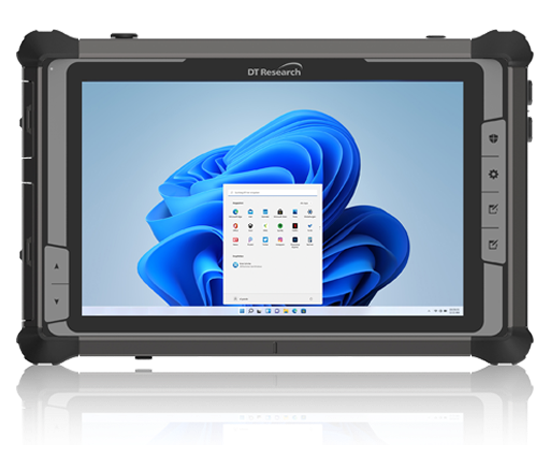
3. Heavy-Duty 10-Inch Tablets: The Ultimate Field Workstation
For complex substation engineering, comprehensive GIS mapping, and tasks that require heavy typing or massive data manipulation, utility crews need a larger canvas. A 10-inch rugged tablet functions as a true laptop replacement, easily mounting into field trucks or clicking into a keyboard when it’s time to draft reports.
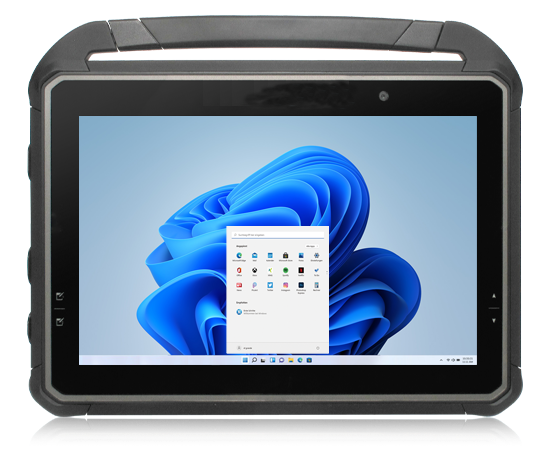
The DT Research DT302 series represents the cutting-edge of this heavy-duty category.
- Next-Gen Processing: Powered by Intel® Core™ Ultra 5 or Ultra 7 processors with up to 64GB of RAM, this tablet handles multi-layered 3D infrastructure models and massive databases without missing a beat.
- Brilliant 1000-Nit Screen: With a 10.1” display pushing a massive 1000 nits of brightness, it boosts readability in direct sunlight.
- 2-in-1 Flexibility: It features a quick-access SSD for easy data security and supports a slim, detachable military-grade keyboard (IP68 rated) that seamlessly converts the tablet into a rugged laptop configuration.
- Maximum Resilience: Along with IP65 and MIL-STD-810H testing, it includes MIL-STD-461G certification for electromagnetic compatibility. This is crucial for utility workers, ensuring the tablet won’t fail or cause interference when operating near high-voltage transformers and heavy electrical noise.
- AI-ready: with NPU3 (13 TOPS) this powerful tablet can take on AI processing for analyzing data sets and find potential issues.
Matching the Right Tool to the Technician
Grid modernization isn’t a one-size-fits-all initiative, and neither is field hardware. By deploying a targeted mix of 6-inch, 8-inch, and 10-inch rugged tablets, utility providers can empower their workforce with tools tailored to their day-to-day realities.
Whether it’s an inspector using a 6-inch handheld to scan high-up transformers, a field repair tech using an 8-inch rugged tablet to pull up schematics, or a substation engineer leveraging a 10-inch workstation to manage a local network, rugged tablets ensure that as our grids get smarter, our field crews stay safer, faster, and permanently connected.