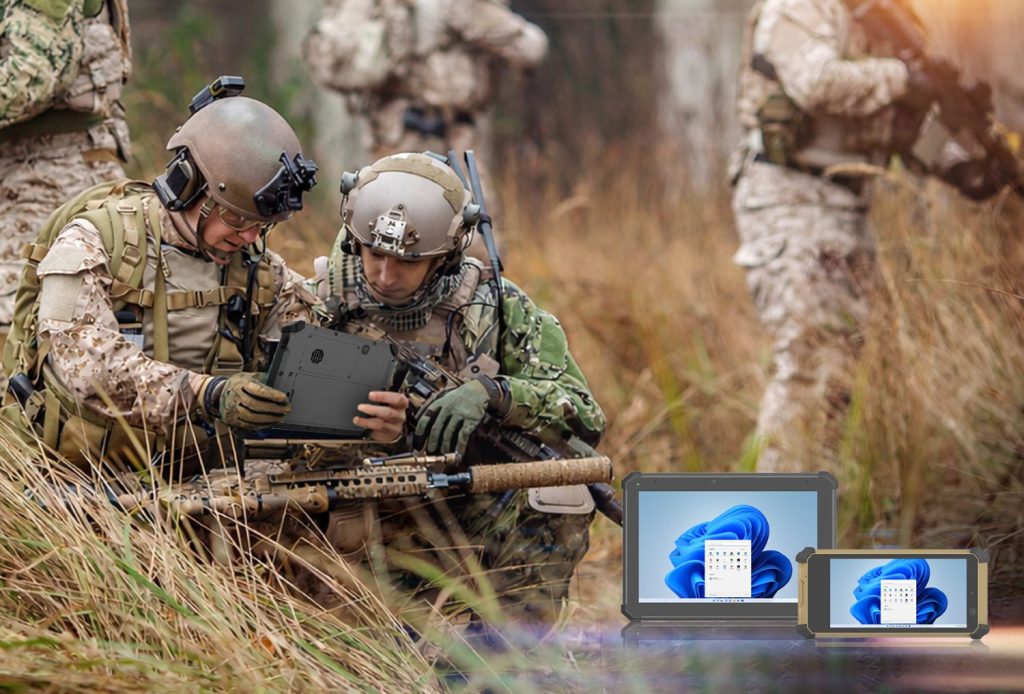
Military-Grade Tablets for Smarter Military Asset Management

Modern military asset management depends on accurate, real-time data. Every vehicle, tool, spare part, supply item, and mission-critical asset must be tracked, verified, and ready when needed. Yet many defense logistics environments still rely on fragmented systems, manual inventory counts, spreadsheets, and delayed reporting.

That approach creates risk.

As military organizations modernize logistics and supply chain visibility, military grade tablets are becoming essential tools for improving asset tracking, inventory accuracy, and operational readiness.

A recent Military Embedded Systems article highlighted how the U.S. Marine Corps is improving asset management through the Marine Corps Platform Integration System, known as MCPIC. The system uses automatic identification technology and rugged tablets to transmit live RFID data, helping personnel improve visibility across inventory, maintenance, deployment, and distribution workflows.

Why Military Asset Management Needs Rugged Mobility

Military asset management is not just about knowing what equipment exists. It is about knowing where assets are, what condition they are in, where they are moving, and whether they are ready for use.

When data is delayed or disconnected, teams can face:

  • Incomplete inventory visibility
  • Slower asset verification
  • Misplaced or untracked equipment
  • Delayed maintenance workflows
  • Reduced accountability
  • More administrative burden

Military grade tablets help solve these challenges by giving personnel a rugged, secure, mobile way to capture and access asset data directly where the work happens.

From Manual Counts to Real-Time Visibility

RFID-enabled workflows are changing how military teams manage inventory. Instead of relying on slow manual processes, rugged tablets can help transmit asset data in real-time from warehouses, maintenance facilities, deployment areas, and distribution points.

This supports:

  • Faster inventory counts
  • Real-time location tracking
  • Better chain-of-custody visibility
  • More accurate deployment readiness data
  • Stronger audit support
  • Improved coordination across teams

The result is a more precise, connected, and accountable asset management process.

Why Military Grade Tablets Matter

Consumer-grade devices are not built for demanding defense environments. Asset management often takes place in warehouses, vehicles, outdoor staging areas, maintenance facilities, and remote locations where devices may face vibration, dust, moisture, extreme temperatures, glare, and constant handling.

DT Research military grade tablets are precision engineered for these conditions, with rugged features that may include:

  • MIL-STD durability
  • IP-rated protection
  • Sunlight-readable displays
  • Hot-swappable batteries
  • CAC/smart card reader options
  • RFID and barcode support
  • Secure wireless connectivity
  • Docking and vehicle integration

These features help military teams keep asset data moving, even in challenging environments.

Supporting Readiness Through Better Data

Asset management is directly tied to readiness. If teams cannot locate equipment, verify inventory, or trust their data, operations slow down.

Military grade tablets help personnel:

  • Validate assets at the point of handling
  • Capture updates in real time
  • Reduce manual entry errors
  • Improve reporting accuracy
  • Strengthen accountability
  • Support faster decision-making

For defense logistics, rugged mobility is not just a convenience. It is part of a smarter data strategy.

Conclusion

Modern military asset management requires secure, accurate, and real-time visibility across equipment, supplies, and movement. Military-grade tablets give defense teams the rugged mobile tools needed to improve inventory workflows, support RFID tracking, strengthen auditability, and enhance operational readiness.

From Sea to Air to Space: Why Rugged Mobility is the Backbone of Real-Time Collaboration

The digital defense environment of 2026 is no longer defined by who has the most hardware but by who can move data securely, quickly, and intelligently when and where it matters most. The recently concluded Sea-Air-Space 2026 exposition presented that the shift toward Joint All-Domain Command and Control (JADC2) has moved from a conceptual framework to a physical reality. At the core of this evolution is the latest generation of rugged tablets and laptops.

Continue reading “From Sea to Air to Space: Why Rugged Mobility is the Backbone of Real-Time Collaboration”

Why Cross-Domain Rugged Tablets Are the New Standard for Command and Control

Modern defense operations depend on information moving securely, quickly, and reliably across multiple environments. The challenge is that mission-critical data does not live in one isolated system. It moves across unclassified logistics networks, secure tactical feeds, and highly classified intelligence channels.

Continue reading “Why Cross-Domain Rugged Tablets Are the New Standard for Command and Control”

The Future of Maritime Operations: Precision-Engineered Tablets for Distributed Systems

The operating environment at sea is becoming more complex and dynamic. Large, centralized fleet structures are transitioning toward a more adaptive and networked model called Distributed Maritime Operations (DMO).

Continue reading “The Future of Maritime Operations: Precision-Engineered Tablets for Distributed Systems”

The Digital Front Line: Rugged Tablets at the Core of Data-Driven Military Operations

The military has made a clear shift away from off-the-shelf military-grade tablets toward customized solutions. Instead of opting for generic models, many organizations now partner with specialized consultants to design rugged computing systems that are precision-engineered to meet their mission-specific needs.

Continue reading “The Digital Front Line: Rugged Tablets at the Core of Data-Driven Military Operations”