
The Next Phase of Clinical Mobility: Connecting Care with Purpose-Engineered Medical Tablets 

Healthcare organizations have invested heavily in digital transformation, from electronic medical records and connected medical devices to mobile workstations and hospital-wide information systems. Yet the next phase of clinical mobility is not simply about adding more technology.

It is about making technology work more naturally within the way clinicians deliver care.

Recent research from VDC Strategy highlights a shift in healthcare mobility from basic device deployment toward broader workflow modernization. Healthcare organizations are looking for ways to reduce fragmented processes, improve communication, strengthen care coordination, and give clinical teams greater access to information wherever care is taking place.

For hospitals and healthcare systems, purpose-engineered medical tablets can play an important role in making that transition possible.

Bringing Digital Workflows Closer to the Patient

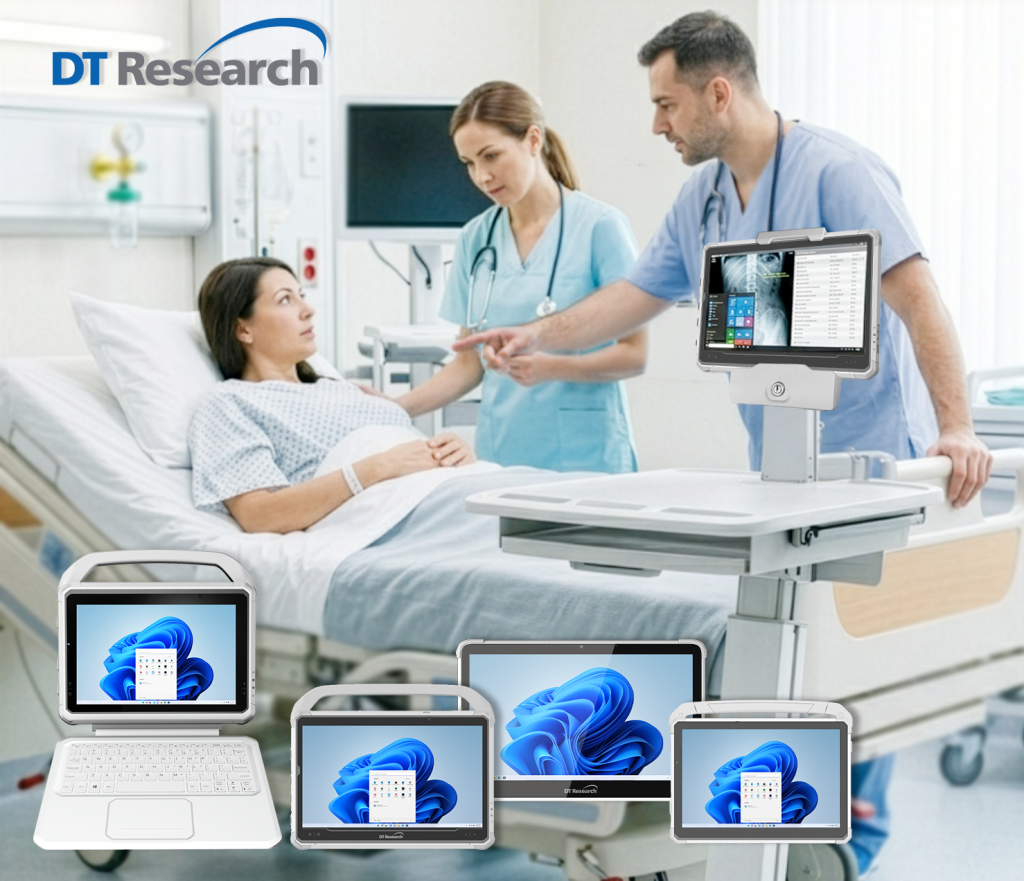
Clinical teams rarely work from one location. Nurses move between patient rooms, nursing stations, medication areas, and diagnostic departments. Physicians may review patient records at the bedside, collaborate with specialists, or move between multiple areas of a hospital during a shift.

Mobile computing allows critical information to move with them.

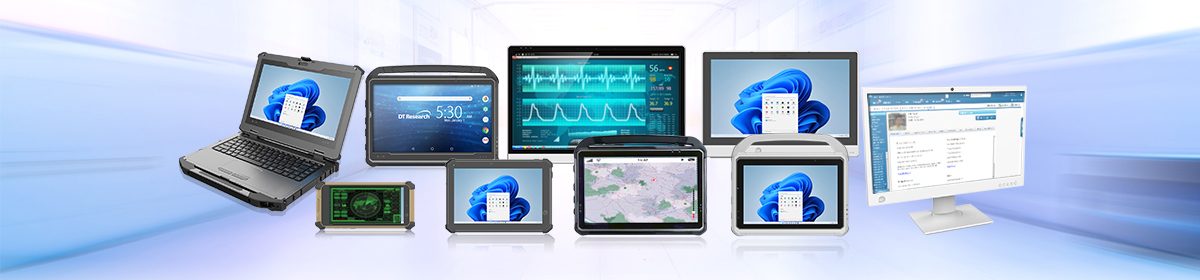
DT Research Medical Tablets are designed specifically for healthcare environments, providing clinicians with portable access to patient information, clinical applications, and data capture capabilities at the point of care. Available models include options such as

  • integrated barcode scanning
  • RFID/NFC readers
  • cameras, smart card readers
  • wireless connectivity

Helping healthcare organizations consolidate multiple workflow requirements into a single mobile platform. Instead of returning to a fixed workstation for every task, clinicians can access and document information closer to the patient.

Designed for the Realities of Healthcare

Consumer mobile devices may offer portability, but clinical environments introduce additional requirements.

DT Research Medical Tablets are available with antimicrobial enclosures and models certified to ANSI/AAMI ES60601-1 medical electrical equipment standards. Select medical tablets also feature IP65-rated protection and MIL-STD-810H certification for durability.

These design characteristics support deployment throughout hospitals, clinics, mobile healthcare environments, and other demanding settings where devices may be moved frequently and cleaned repeatedly.

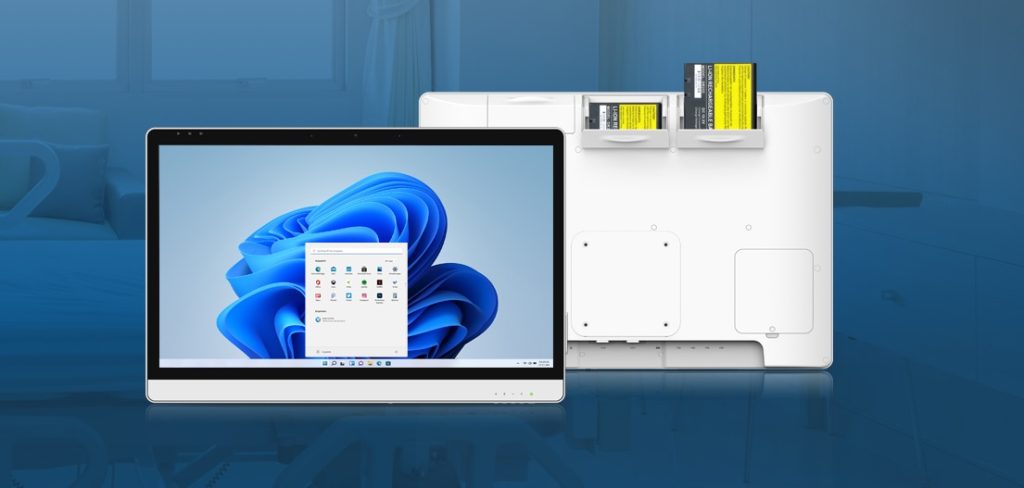
Battery performance is equally important. DT Research models offer 10”, 13”, 16″, and 17” touch displays and incorporate hot-swappable battery designs, allowing batteries to be replaced while maintaining continuous operation. This helps reduce workflow interruptions during extended clinical use.

Supporting More Connected Clinical Operations

The evolution of clinical mobility also extends beyond individual clinicians.

Medical tablets and mobile workstations increasingly serve as connection points between healthcare professionals, electronic medical records, hospital information systems, diagnostic platforms, inventory systems, and other clinical resources.

Integrated barcode and RFID capabilities can support workflows such as patient identification, medication verification, specimen tracking, and medical asset management. Wireless connectivity allows information captured at the point of care to flow back into clinical systems without relying on disconnected paper processes or delayed manual entry.

The result is a more connected clinical environment where information can follow the workflow rather than requiring the workflow to follow the computer.

Moving Clinical Mobility Forward

As healthcare organizations continue modernizing point-of-care operations, mobility strategies will increasingly be measured by how well they support clinicians rather than simply how many devices are deployed.

Purpose-engineered medical computing provides the foundation for that shift.

With medical tablets, medical cart computers, all-in-one systems, and other healthcare computing solutions, DT Research helps healthcare organizations build flexible technology environments designed around mobility, reliability, secure access to information, and continuity of care.

The next phase of clinical mobility is about connecting people, systems, and information wherever care happens. DT Research is building the technology designed to move with it.
Revolutionizing Healthcare with Medical-Cart Computers Featuring Hot-Swappable Batteries

In today’s fast-paced healthcare environment, technology plays a critical role in enhancing efficiency and improving patient care. One standout innovation is medical-cart computers equipped with hot-swappable batteries, offering unparalleled mobility, infection control, and versatility. These slim, mountable computers eliminate the need for heavy, cumbersome batteries that require hours of charging, allowing for seamless portability and continuous operation.

Continue reading “Revolutionizing Healthcare with Medical-Cart Computers Featuring Hot-Swappable Batteries”

Enhancing Rural Emergency Care with Medical Tablets and Cart Computers Through Pioneering Telemedicine Solutions

In rural and underserved areas, access to healthcare often poses a significant challenge. Geographical distance, limited medical staff, and logistical obstacles can delay critical treatment, particularly during emergencies. However, technology is helping to bridge this gap in innovative ways. Advanced medical tablets and all-in-one (AIO) medical cart computers have emerged as essential tools in transforming emergency care delivery, enabling real-time telemedicine solutions that enhance patient outcomes and bring expert care to the most remote locations.

Revolutionizing Emergency Care in Rural Areas with Medical Tablets

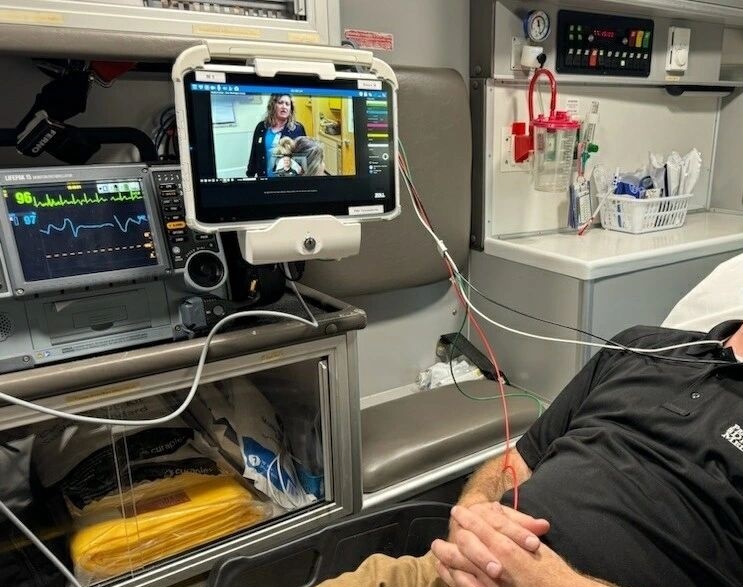
Medical tablets, especially ruggedized models designed for mobile environments, are making a substantial difference in emergency care scenarios. These reliable handhelds bring hospital-level technology directly to the patient, whether in the back of an ambulance or at the scene of an emergency. Purpose-built for reliability, rugged medical tablets are designed to endure the demands of emergency medical services (EMS), offering features that make them highly effective for remote consultation, diagnosis, and early intervention.

Key features of medical tablets designed for emergency care include:

  • High-Resolution, Sunlight-Readable Displays: These screens ensure visibility in various lighting conditions, allowing EMS staff to access patient information and video feeds without visual strain.
  • Rugged Construction: With shock-resistant casing and antimicrobial surfaces, these tablets withstand the rigors of field use while maintaining hygiene standards in patient care.
  • Powerful Connectivity and Telemedicine Software: Equipped with robust Wi-Fi and cellular options, these tablets integrate seamlessly with telemedicine platforms to enable real-time video consultations.
  • Hot-Swappable Batteries: To ensure continuous operation, medical tablets feature hot-swappable batteries, a vital feature in emergency scenarios where device downtime is not an option.

By incorporating these features, medical tablets help EMS teams and rural healthcare facilities overcome the limitations of their locations, ensuring that patients receive expert care as swiftly as possible.

The Role of Medical Cart Computers in Supporting Hospital-Based Emergency Care

Medical cart computers, or AIO computers, are another pivotal technology that aids in delivering high-quality emergency care. Used primarily in hospital settings, these mobile workstations are wheeled directly to patients’ bedsides, offering a comprehensive computing setup on a compact, mobile cart. In rural hospitals, where healthcare resources are often stretched thin, these cart computers allow healthcare providers to access critical patient data, monitor vitals, and collaborate with specialists, effectively transforming any space into a fully equipped workstation.

Key benefits of medical cart computers include:

  • Increased Mobility and Flexibility: These units can be moved easily, enabling healthcare providers to use them at any location in the hospital for flexible, responsive care. With optional hot-swappable batteries, a workstation does not get abandoned to charge or require a heavy cart battery, enabling continuous operation and agility.
  • Streamlined Workflow: With an all-in-one design, medical cart computers provide access to electronic health records (EHR), imaging software, and telemedicine applications, eliminating the need to switch between devices and improving care efficiency.
  • Data Security and Patient Privacy: Equipped with robust security features and often compliant with healthcare IT standards, cart computers ensure that patient information is protected.
  • High-Performance Components: Medical cart computers are designed for demanding applications and can handle high-resolution imaging, video calls, and real-time data input, enabling fast, accurate decision-making during emergencies.

Improving Rural Emergency Care with Real-Time Telemedicine

Telemedicine technology, when combined with medical tablets and cart computers, can revolutionize rural healthcare by connecting EMS teams and hospital staff to specialists regardless of location. In an emergency, seconds count, and telemedicine allows EMS personnel to begin critical assessments, diagnostics, and even some treatments on-site or en route to the hospital. Through telemedicine, a patient in a rural area can gain immediate access to an emergency department physician or a specialist who can provide expert guidance in real-time.

Examples of telemedicine-enabled interventions include:

  • Stroke Assessment: A physician can conduct a stroke scale assessment while the patient is still in the ambulance, directing EMS staff in managing blood pressure and other critical factors.
  • EKG Analysis for Cardiac Events: Through telemedicine-enabled medical tablets, EMS can transmit EKG results to hospital staff in real-time, allowing them to assess cardiac patients and initiate treatment protocols before the patient arrives.
  • Consultation for Trauma Care: During accidents or trauma events, EMS teams can share live video feeds with remote trauma experts who can guide them through lifesaving procedures or help them determine the best destination for specialized treatment.

By enabling these capabilities, medical tablets and cart computers play a crucial role in closing the gap between rural and urban healthcare services, ensuring that distance does not compromise the quality of care.

The Future of Emergency Care: Scaling Telemedicine in Rural Areas

The integration of telemedicine with rugged medical tablets and cart computers is setting a new standard for rural healthcare. As more hospitals, EMS teams, and healthcare providers adopt these technologies, the benefits are becoming increasingly apparent. Patients in rural and remote areas can now receive the same immediate care and expert consultation that urban patients receive, leading to faster response times, improved health outcomes, and reduced healthcare disparities.

In the future, we can expect to see expanded adoption of telemedicine solutions, particularly in rural regions where healthcare resources are limited. Medical tablets and cart computers equipped with advanced telemedicine software will continue to play an essential role in bridging the gap in healthcare access, empowering rural EMS teams, and ensuring that all patients have access to lifesaving medical care, regardless of location.

Medical tablets and cart computers are changing the landscape of emergency care by bringing telemedicine capabilities directly to rural areas. By enabling EMS and hospital teams to conduct real-time video consultations, access vital patient data, and initiate care before reaching the hospital, these devices are setting a new standard for emergency medical services. As rural healthcare systems continue to adopt these solutions, the future of emergency care will be one where no patient is too far from expert medical support. With the advancements provided by companies like DT Research and swyMed, rural patients can expect faster, more reliable, and more equitable healthcare when it matters most.