Bridging the Gap: How New Compact Medical All-in-Ones and Fleet Intelligence are Transforming Point-of-Care

The healthcare landscape is shifting. As we revisit and look back at the innovations and technologies showcased at HIMSS 2026, one thing is clear: the demand for mobility and continuous uptime has never been higher. For years, clinicians have had to choose between the portability of tablets and the screen space of traditional All-in-One (AIO) systems.

Thus, DT Research has spent decades listening to the challenges faced by healthcare IT professionals and frontline staff. The feedback was consistent and clear: clinicians need medical computing solutions that fit into tighter spaces without sacrificing screen real estate or power. We answered that call at the recently concluded HIMSS 2026 by introducing a new class of medical computing that bridges this gap, supported by sophisticated software to manage the lifeblood of mobile care: the battery.

The New Class of Compact Medical AIOs

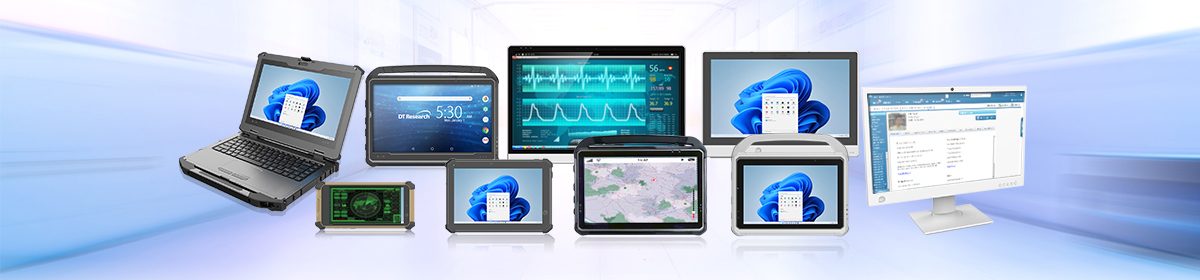
Standard medical carts are often bulky, and wall mounts can be restrictive. To provide greater flexibility across stick carts, wall mounts, and kiosks, DT Research introduced the all-new DT573 and DT556 Medical Computers.

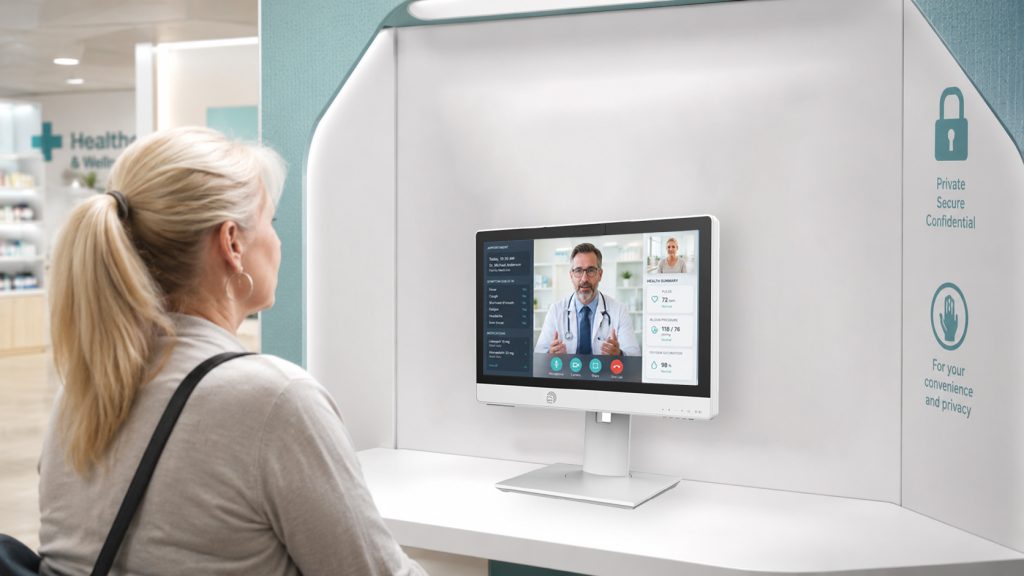
These medical-grade all-in-one (AIO) computers are designed to bridge the gap between portable tablets and traditional, bulky medical workstations. These fanless systems prioritize mobility and infection control while minimizing tipping risks, making them optimized for deployment on slim carts and fixed installations such as patient rooms or telehealth kiosks. They are particularly distinguished by their rear-mounted, hot-swappable battery design, which ensures continuous 24/7 operation while leaving the top of the unit clear for clinical peripherals like 360-degree cameras or speakers.

Key Features of the DT573 and DT556

  • Display Sizes: The DT573 features a 17.3-inch high-resolution touchscreen, while the DT556 offers a more compact 15.6-inch display.
  • Continuous Power: Equipped with dual hot-swappable batteries that allow clinicians to exchange power packs without shutting down the system, eliminating downtime for charging.
  • Infection Control: Built with antimicrobial enclosures and a fanless architecture to prevent the circulation of airborne pathogens; the front bezel is IP65-rated for easy liquid disinfection.
  • High Performance: Uses the newest Intel Core Ultra or Qualcomm 6490 processors, giving it enough power for accessing electronic medical records, reviewing medical images, and handling complex telehealth tasks.
  • Peripheral Integration: Designed with a “clear top” to accommodate 360-degree cameras and large speakers, making them ideal for telehealth and real-time language translation.
  • Flexible Mounting: Fully VESA-compliant, allowing for easy attachment to wall mounts, articulated arms, or lightweight mobile carts.
  • Security & Authentication: Includes options for Imprivata-compatible dual-frequency RFID readers, IR cameras for facial recognition, and smart card/CAC readers to ensure HIPAA-compliant secure access.
  • Connectivity: Supports modern wireless standards, including Wi-Fi 6E/7 and 5G, ensuring stable data transfer for high-bandwidth medical tasks.

Solving the “Dead Battery” Battle

Hardware is only half of the picture. In a hospital setting, a mobile workstation is only as good as its last charge. Managing a fleet of hundreds of battery-powered devices has been a reactive manual process, resulting in “battery anxiety” for staff and unexpected downtime.

To solve this, DT Research developed the WebDT Battery Fleet Management Software. This isn’t just a monitoring tool; it’s a proactive command center.

With this software, IT departments can:

  • Monitor Health in Real-Time: Track the state of charge and overall health across hundreds of devices from a single dashboard.
  • Predictive Maintenance: Identify batteries that are nearing the end of their lifecycle before they fail during a shift.
  • Optimize Workflow: Ensure that every cart rolled out for a shift is fully powered and ready for duty.

By centralizing this data, hospitals can significantly reduce the total cost of ownership by extending battery life.

Why Form Factor and Fleet Intelligence Matter

Wider industry trends support the shift toward compact, battery-driven AIOs. Research into nursing workflows suggests that “technology-related interruptions,” such as hardware failure or power loss, significantly impact patient safety and clinician burnout.

By providing precision-engineered hardware like the DT574 and the software intelligence to back it up, we are removing the friction between the caregiver and the digital record.

The flexibility to move between a stick cart in a hallway and a wall mount in a patient room, without rebooting or losing power, allows for a more “human” interaction. The technology fades into the background, allowing the clinician to focus entirely on the patient.

Looking Ahead Post-HIMSS 2026

HIMSS 2026 proved that the future of healthcare is mobile, but that mobility must be sustainable. The introduction of the DT573, DT556, and DT574, paired with WebDT Battery Fleet Management Software, sets a new standard for what hospitals should expect from their technology partners.

At DT Research, we remain committed to engineering solutions that are as resilient as the professionals who use them. We aren’t just building computers; we are building the infrastructure for a more efficient, mobile, and responsive healthcare system.

For more information on our latest medical AIOs and fleet management solutions, view our official announcements on the DT573/DT556 release and the DT574 and WebDT Battery Fleet Manager.    

Future-Ready Healthcare Data Management with Medical Tablets and AIOs

Healthcare organizations are under constant pressure to modernize. Interoperability mandates, rising patient volumes, cybersecurity threats, and workforce shortages are forcing leaders to rethink how data moves across their systems. Future-proofing healthcare no longer begins in the server room, it begins at the point of care.

Continue reading “Future-Ready Healthcare Data Management with Medical Tablets and AIOs”

Field Surveying Without the Chaos: How Rugged Tablets Are Redefining Data Flow

Field surveying has never been simple. Teams are dispersed. Sites are remote. Conditions are unpredictable. And yet the expectation remains the same: precise data, delivered quickly, with zero room for error. The real bottleneck is rarely the survey itself. It is the workflow.

When files are scattered across devices, inboxes, USB drives, and disconnected cloud accounts, teams waste time asking a familiar question: Who has the latest version?

That uncertainty slows projects, creates rework, and increases risk. In industries where precision defines profitability, disconnected systems are no longer acceptable.

From Fragmented Files to Continuous Data Flow

Modern surveying demands a connected workflow where data moves automatically from the field to the office and back again. Rugged tablets are precision-engineered to support exactly that transformation.

Instead of manually exporting files at the end of the day, survey data syncs in real-time, even while on location, without the need for returning to an office first; leaving less room for human error and more time for accurate decision making. Automated data synchronization ensures updates are immediately available to project managers, engineers, and office staff. Centralized project management replaces scattered storage, and teams stay aligned without duplicate uploads or version confusion.

Built for Precision in Real-World Conditions

Surveying is not a desk job. It happens in wind, dust, rain, and extreme temperatures. Whether mapping land boundaries, conducting ecological surveys, extending runways, managing mining sites, or supporting large construction projects, hardware must survive where consumer devices fail.

DT Research’s 10-inch rugged tablets are field-ready by design:

  • High-bright 10-inch display for outdoor visibility
  • Intel Core Ultra processor running Microsoft Windows 11 IoT Enterprise
  • Integrated GNSS/GPS for precise positioning
  • Hot-swappable batteries for continuous operation
  • 4G LTE, BT wireless connectivity for live communication and remote data transfer
  • IP65, MIL-STD-810H/461G for water, dust, vibration, and drop protection
  • Front/back cameras, barcode scanner, smart card/CAC reader

With built-in GNSS capabilities, surveyors gain accurate positioning directly from the rugged tablet, reducing dependency on multiple disconnected tools. For workflows requiring even higher precision, rugged tablets integrate seamlessly with total stations and other geospatial instruments.

This flexibility ensures compatibility with leading surveying ecosystems,  enabling professionals to operate within established geospatial workflows without disruption.

Connected Field Intelligence

The shift is not just about durability. It is about intelligence at the edge.

Rugged Tablets allow field crews to:

  • Access updated project files instantly
  • Push data to the office in real-time
  • Receive design revisions without returning to headquarters
  • Coordinate across teams through LTE connectivity

As a result, operations accelerate, errors decrease, and decision cycles shrink. Instead of treating the field as a disconnected endpoint, rugged tablets transform it into an active, connected node within the project lifecycle.

Surveying at the Speed of Modern Infrastructure

As infrastructure projects grow more complex and timelines tighten, surveying workflows must evolve. Digital coordination, automated syncing, and secure centralized data management are no longer optional. They are operational requirements.

Rugged tablets provide the processing power, positioning accuracy, and field resilience necessary to meet those demands. By combining GNSS precision, total station integration, automated data flow, and enterprise-grade computing in a 10-inch field-ready form factor, they bridge the gap between the jobsite and the office.

Surveying has always been about accuracy. Now it is also about connection. And in today’s environment, the teams that stay connected move ahead.

Enabling a Digitally Connected Shared Care Model with Medical Tablets and AIOs

Healthcare systems worldwide are facing mounting backlogs, particularly in specialist clinics. Referral volumes continue to rise, waitlists are under pressure, and clinicians are stretched across increasingly complex patient needs.

Continue reading “Enabling a Digitally Connected Shared Care Model with Medical Tablets and AIOs”

From Downtime to Data-Driven: What PalletOne Teaches About Modern Manufacturing Mobility

Manufacturing has always been about precision. Precision in timing. Precision in materials. Precision in execution. But today, precision depends just as much on data flow as it does on production flow.

Continue reading “From Downtime to Data-Driven: What PalletOne Teaches About Modern Manufacturing Mobility”