
In shipping and logistics, operational efficiency depends on more than process. It depends on technology that can keep pace with the realities of the warehouse floor. From busy loading docks to complex space planning, consumer-grade tablets often fall short where durability, reliability, and continuous performance matter most.
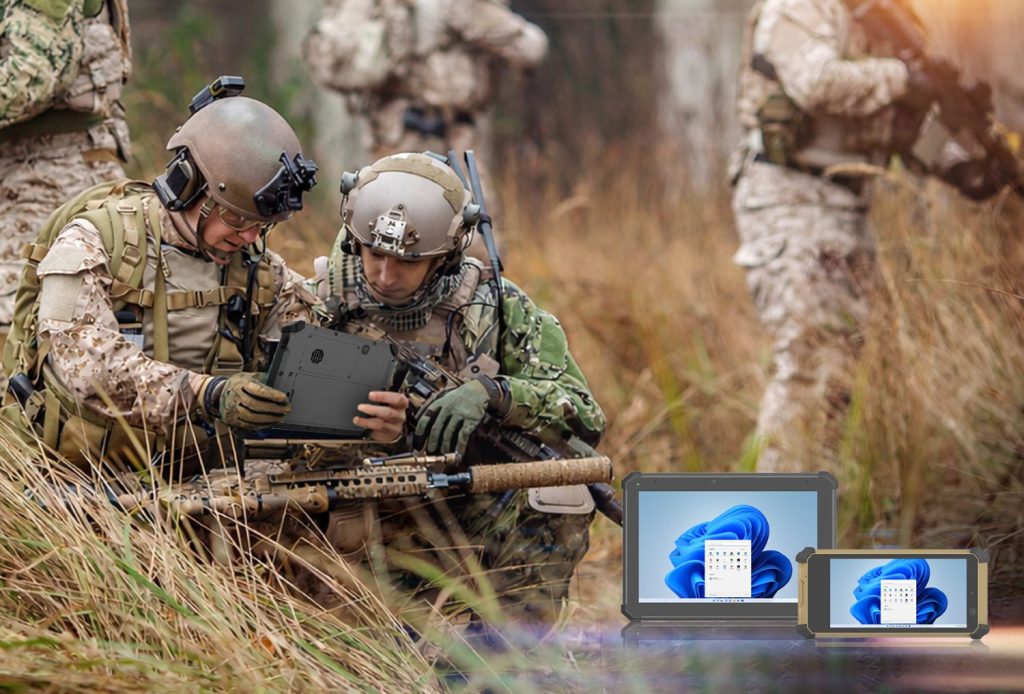
Defense modernization now moves at the velocity of software development and data integration rather than traditional procurement cycles. Platforms must seamlessly incorporate emerging technologies, advanced analytics, secure communications, and evolving mission applications without triggering full hardware replacement.
As a result, the Modular Open Systems Approach (MOSA) has become a foundational strategy across U.S. defense programs. Through open standards and modular design, MOSA supports scalable upgrades, long-term lifecycle efficiency, and sustained interoperability across complex systems.
However, open architecture strategies are only as effective as the hardware supporting them. Modular software requires adaptable, standards-based computing platforms at the edge.
Enabling Open Integration at the Endpoint
MOSA depends on systems that can integrate new applications, sensors, radios, and peripherals without redesigning the entire platform. Military-grade rugged tablets and rugged laptops must support this flexibility from the outset.
Military-grade computing solutions are precision-engineered to align with open systems principles. Designed with modular expansion capabilities, integrated secure authentication, and compatibility with widely adopted operating environments, these platforms allow agencies to deploy new capabilities incrementally rather than through disruptive system overhauls.
This modularity reduces vendor lock-in while simplifying integration across multi-domain programs and joint initiatives.
Supporting Technology Refresh Without System Disruption
One of MOSA’s central objectives is accelerating technology refresh cycles. As processing power, AI acceleration, and connectivity standards evolve, computing platforms must adapt without forcing wholesale replacement.
Modern rugged tablets and laptops incorporate high-performance processors, AI-ready architectures, and secure connectivity frameworks that support emerging workloads. Expansion modules and configurable interfaces allow organizations to integrate new communications standards, positioning systems, and mission-specific peripherals over time. This approach extends platform lifecycles while preserving budget efficiency and minimizing operational disruption.
Built for Demanding Operational Environments
Open systems strategies cannot succeed if endpoint hardware fails in real-world conditions. Military-grade tablets and laptops must combine modular flexibility with environmental durability.
Military-grade tablets and laptops are engineered to meet rigorous standards for shock, vibration, temperature tolerance, and ingress protection. Features such as sunlight-readable displays, NVIS compatibility, and hot-swappable batteries ensure continuous functionality in diverse deployment environments.
Reliability at the hardware layer protects the broader open architecture ecosystem.
Advancing Interoperability and Long-Term Sustainability
MOSA strengthens interoperability across programs by promoting standardized interfaces and shared frameworks. Military-grade tablet endpoints serve as the human-machine interface within this ecosystem, consolidating data from sensors, networks, and enterprise systems into secure, mobile computing environments.
By aligning rugged hardware design with MOSA principles, defense organizations gain scalable, upgrade-ready infrastructure that supports long-term modernization strategies.
The Modular Open Systems Approach is more than a compliance requirement. It is a structural shift toward adaptability, interoperability, and sustainable innovation. Military-grade tablets and rugged laptops purpose-built for open integration ensure that this strategy delivers measurable, long-term value.
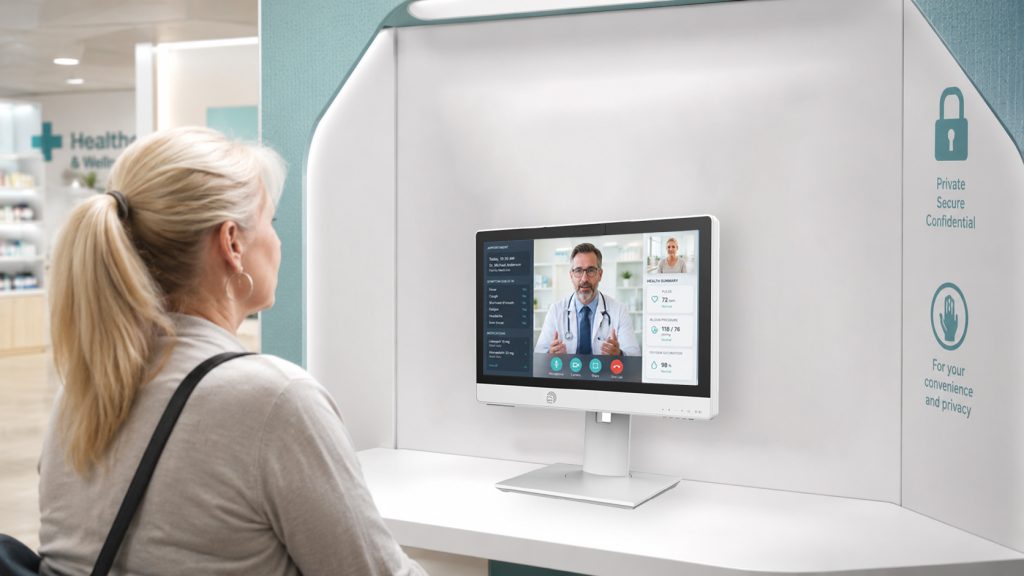
Healthcare organizations are under constant pressure to modernize. Interoperability mandates, rising patient volumes, cybersecurity threats, and workforce shortages are forcing leaders to rethink how data moves across their systems. Future-proofing healthcare no longer begins in the server room, it begins at the point of care.
Field surveying has never been simple. Teams are dispersed. Sites are remote. Conditions are unpredictable. And yet the expectation remains the same: precise data, delivered quickly, with zero room for error. The real bottleneck is rarely the survey itself. It is the workflow.
When files are scattered across devices, inboxes, USB drives, and disconnected cloud accounts, teams waste time asking a familiar question: Who has the latest version?
That uncertainty slows projects, creates rework, and increases risk. In industries where precision defines profitability, disconnected systems are no longer acceptable.
From Fragmented Files to Continuous Data Flow
Modern surveying demands a connected workflow where data moves automatically from the field to the office and back again. Rugged tablets are precision-engineered to support exactly that transformation.
Instead of manually exporting files at the end of the day, survey data syncs in real-time, even while on location, without the need for returning to an office first; leaving less room for human error and more time for accurate decision making. Automated data synchronization ensures updates are immediately available to project managers, engineers, and office staff. Centralized project management replaces scattered storage, and teams stay aligned without duplicate uploads or version confusion.
Built for Precision in Real-World Conditions
Surveying is not a desk job. It happens in wind, dust, rain, and extreme temperatures. Whether mapping land boundaries, conducting ecological surveys, extending runways, managing mining sites, or supporting large construction projects, hardware must survive where consumer devices fail.
DT Research’s 10-inch rugged tablets are field-ready by design:
High-bright 10-inch display for outdoor visibility
Intel Core Ultra processor running Microsoft Windows 11 IoT Enterprise
Integrated GNSS/GPS for precise positioning
Hot-swappable batteries for continuous operation
4G LTE, BT wireless connectivity for live communication and remote data transfer
IP65, MIL-STD-810H/461G for water, dust, vibration, and drop protection
With built-in GNSS capabilities, surveyors gain accurate positioning directly from the rugged tablet, reducing dependency on multiple disconnected tools. For workflows requiring even higher precision, rugged tablets integrate seamlessly with total stations and other geospatial instruments.
This flexibility ensures compatibility with leading surveying ecosystems, enabling professionals to operate within established geospatial workflows without disruption.
Connected Field Intelligence
The shift is not just about durability. It is about intelligence at the edge.
Rugged Tablets allow field crews to:
Access updated project files instantly
Push data to the office in real-time
Receive design revisions without returning to headquarters
Coordinate across teams through LTE connectivity
As a result, operations accelerate, errors decrease, and decision cycles shrink. Instead of treating the field as a disconnected endpoint, rugged tablets transform it into an active, connected node within the project lifecycle.
Surveying at the Speed of Modern Infrastructure
As infrastructure projects grow more complex and timelines tighten, surveying workflows must evolve. Digital coordination, automated syncing, and secure centralized data management are no longer optional. They are operational requirements.
Rugged tablets provide the processing power, positioning accuracy, and field resilience necessary to meet those demands. By combining GNSS precision, total station integration, automated data flow, and enterprise-grade computing in a 10-inch field-ready form factor, they bridge the gap between the jobsite and the office.
Surveying has always been about accuracy. Now it is also about connection. And in today’s environment, the teams that stay connected move ahead.
For the manufacturing and logistics industry, time isn’t just money, it’s the difference between a satisfied customer and a lost contract. For decades, the industry standard was the manual barcode scan. It worked, but it was slow, required a direct line of sight, and was prone to the inevitable “human factor” of missed items.